Granular Activated Carbon Supplier: How to Choose the Right Partner for Superior Filtration Performance
In industries where purification directly impacts product quality, operational efficiency, and regulatory compliance, filtration is more than just a process - it's a business-critical function. Whether treating drinking water, purifying process streams, controlling industrial emissions, or recovering valuable materials, the effectiveness of a filtration system often depends on one essential component: Granular Activated Carbon (GAC).
Introduction
Although activated carbon products may appear identical, their performance can vary considerably. Factors such as raw material quality, activation techniques, pore distribution, and manufacturing precision determine how effectively the carbon adsorbs contaminants. Using substandard activated carbon can compromise filtration efficiency, increase maintenance requirements, and lead to higher long-term operating costs.
This is why selecting the right Granular Activated Carbon Supplier is just as important as selecting the right activated carbon itself. An experienced supplier does more than provide a filtration medium. They understand the requirements of different industries, recommend the most suitable grade for each application, and ensure consistent product quality across every batch.
As industries continue to prioritize sustainability, resource efficiency, and environmental responsibility, the demand for high-performance granular activated carbon continues to grow. Businesses today are looking for reliable partners who can deliver technically advanced products while supporting their long-term operational goals.
In this guide, we’ll explore how granular activated carbon works, why it remains the preferred choice across multiple industries, and the key factors businesses should consider when choosing a trusted Granular Activated Carbon Supplier.
Why Granular Activated Carbon Is the Preferred Choice for Industrial Filtration
Granular Activated Carbon has become one of the most widely used purification media because of its exceptional ability to remove dissolved contaminants from liquids and gases. Unlike conventional filters that primarily capture suspended particles, GAC targets contaminants at a molecular level through a process called adsorption.
Its highly porous structure provides an enormous internal surface area where impurities are trapped as water, air, or process fluids pass through the carbon bed. This makes granular activated carbon highly effective in removing chlorine, volatile organic compounds (VOCs), pesticides, taste and odor compounds, organic chemicals, and many other impurities that conventional filtration methods cannot efficiently eliminate.
Another advantage of GAC is its versatility. It can be used in both large-scale industrial facilities and smaller commercial systems without requiring complex process modifications. This flexibility has made it the preferred filtration medium for industries ranging from municipal water treatment to pharmaceutical manufacturing.
Because of its long service life, consistent performance, and ability to improve purification efficiency, granular activated carbon continues to play a vital role in modern industrial filtration systems.
How Granular Activated Carbon Works
The performance of granular activated carbon is based on a simple yet highly effective principle known as adsorption.
Adsorption differs from absorption. In absorption, a substance is taken into another material. In adsorption, contaminants adhere to the surface of the activated carbon.
During manufacturing, carbon-rich raw materials are exposed to carefully controlled activation processes that create millions of microscopic pores. These pores dramatically increase the carbon’s internal surface area, providing countless sites where contaminants can attach.
When contaminated water or air flows through the activated carbon bed, dissolved organic compounds, odors, chemicals, and gases are naturally attracted to these porous surfaces. As contaminants become trapped within the pore structure, cleaner water or air exits the filtration system.
Several factors influence adsorption performance, including:
- Surface area available for adsorption
- Pore size distribution
- Particle size
- Contact time
- Concentration of contaminants
- Operating conditions
These factors explain why activated carbon products with similar appearances may perform very differently in real-world applications. The manufacturing process and raw material quality ultimately determine how effectively the carbon removes contaminants.
Why Coconut Shell Activated Carbon Delivers Superior Performance
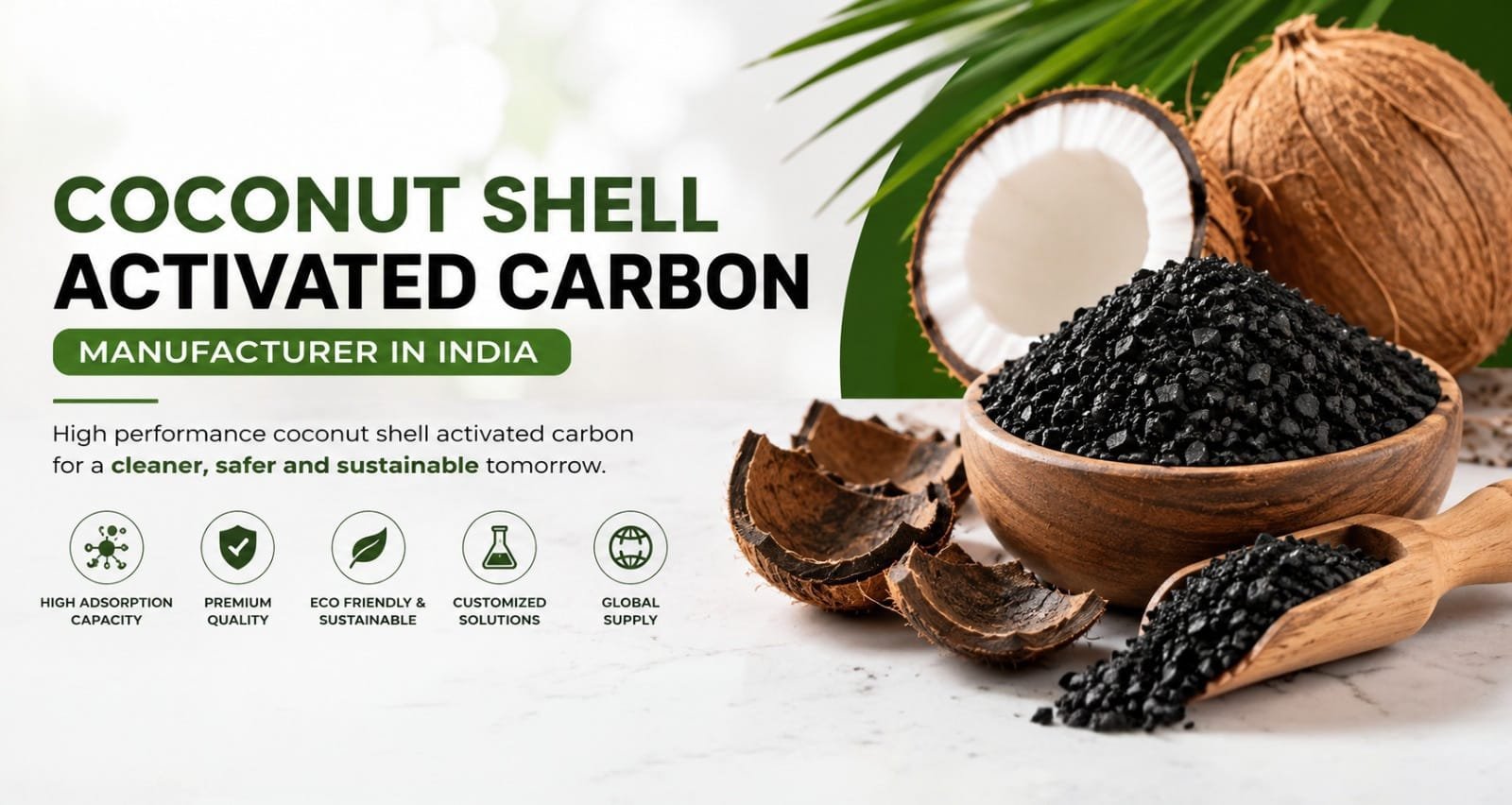
Activated carbon can be produced from several raw materials, including coal, wood, and coconut shells. Among these, coconut shell activated carbon is widely recognized for its excellent physical strength and high adsorption capacity, making it the preferred choice for demanding industrial applications.
One of its biggest advantages is its naturally dense microporous structure. These tiny pores are particularly effective at adsorbing low molecular weight contaminants commonly found in drinking water, industrial process water, and air purification systems.
Coconut shell activated carbon also offers exceptional hardness, allowing it to withstand continuous operation with minimal particle breakdown. Reduced dust formation and lower carbon loss contribute to longer filter life and lower maintenance costs.
Another important benefit is its relatively low ash content. This helps maintain cleaner filtration processes and makes coconut shell activated carbon suitable for applications where purity is essential, such as food and beverage processing and pharmaceutical manufacturing.
Beyond performance, coconut shells are a renewable agricultural by-product. Converting them into activated carbon supports sustainable manufacturing practices by utilizing a naturally available resource that would otherwise go to waste. For industries pursuing environmentally responsible operations, coconut shell activated carbon provides an effective balance between performance and sustainability.
Major Industrial Applications of Granular Activated Carbon
The ability of granular activated carbon to remove a wide variety of contaminants has made it indispensable across numerous industries.
Water Treatment
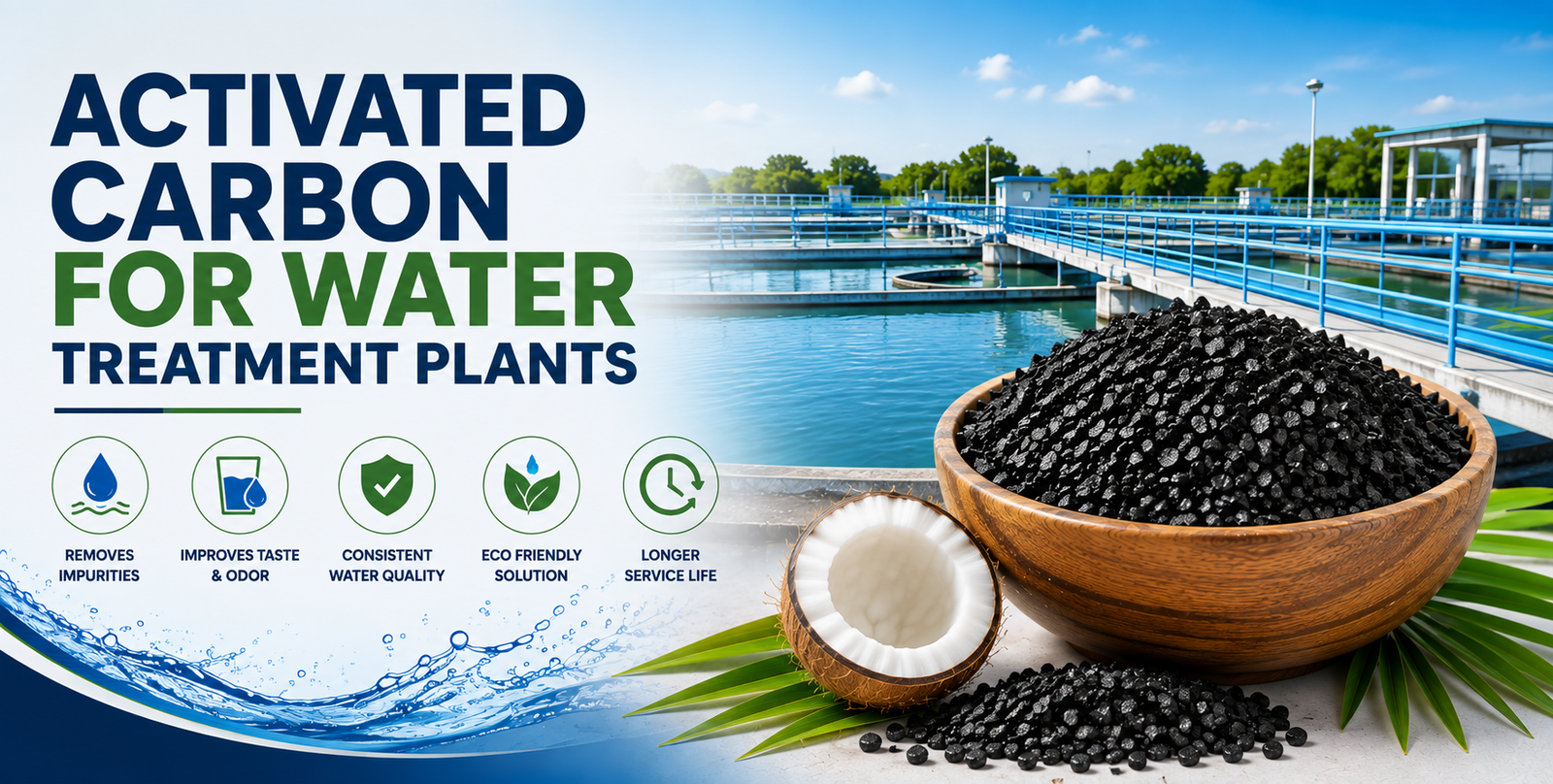
Municipal and industrial water treatment plants use granular activated carbon to remove chlorine, dissolved organic compounds, pesticides, unpleasant taste, odor, and color from water. It helps improve water quality while protecting downstream treatment equipment.
Wastewater Treatment
Industrial wastewater often contains residual organic contaminants that remain after primary treatment. Granular activated carbon acts as an effective polishing medium, helping industries meet discharge regulations and support water reuse initiatives.
Air and Gas Purification
Activated carbon is widely used to remove volatile organic compounds, chemical vapors, industrial odors, and harmful gases from exhaust streams and air handling systems, contributing to safer workplaces and cleaner emissions.
Food and Beverage Processing
Manufacturers use granular activated carbon to purify edible oils, sugar syrups, beverages, and processing water. Its ability to remove unwanted color, odor, and organic impurities helps maintain consistent product quality.
Pharmaceutical Manufacturing
In pharmaceutical production, maintaining purity throughout the manufacturing process is essential. Activated carbon supports impurity removal and helps manufacturers achieve stringent quality standards.
Gold Recovery and Chemical Processing
Granular activated carbon is extensively used in gold extraction processes because of its high adsorption capacity for dissolved gold complexes. It also plays an important role in solvent recovery, catalyst purification, and chemical processing applications where high-purity process streams are required.
Across these industries, the effectiveness of the filtration system depends not only on the activated carbon itself but also on the expertise of the Granular Activated Carbon Supplier behind it. Choosing the right supplier ensures consistent product quality, technical guidance, and reliable long-term performance.
How to Choose the Right Granular Activated Carbon Supplier
Selecting a Granular Activated Carbon Supplier is not simply about comparing prices. The quality of activated carbon directly affects filtration efficiency, equipment performance, operational costs, and product quality. Partnering with the right supplier ensures that your business receives a product that consistently meets performance expectations while supporting long-term operational goals.
Here are some important factors to consider when evaluating a supplier.
Manufacturing Expertise
A supplier with strong manufacturing capabilities understands the science behind activated carbon production. From selecting premium raw materials to controlling the activation process, every stage influences the final product’s adsorption performance. Experienced manufacturers are also better equipped to recommend the right grade of activated carbon for specific industrial applications.
Consistent Product Quality
Consistency is one of the most important factors in industrial filtration. Variations in particle size, hardness, pore structure, or adsorption capacity can impact system performance and increase maintenance requirements. A reliable supplier follows strict quality control procedures to ensure every batch delivers the same level of performance.
Technical Support and Application Knowledge
Different industries face different purification challenges. Whether the application involves drinking water treatment, wastewater management, air purification, or chemical processing, the supplier should have the technical expertise to recommend the most suitable activated carbon based on operating conditions and contaminants.
Customised Solutions
There is no universal activated carbon solution for every application. A trusted supplier understands this and offers customised products based on the customer’s filtration requirements. Tailored solutions often result in better adsorption efficiency, longer service life, and improved operational performance.
Sustainable Manufacturing
Sustainability has become an important purchasing consideration for industries worldwide. Choosing a supplier that uses renewable raw materials and environmentally responsible manufacturing practices helps businesses achieve both performance and sustainability goals.
Why CG Carbon Is a Trusted Granular Activated Carbon Supplier
When industries invest in activated carbon, they expect more than just a filtration medium. They need a dependable partner that understands their operational challenges and delivers consistent solutions. This is where CG Carbon stands apart.
As a leading manufacturer of coconut shell activated carbon, CG Carbon has built its reputation by supplying high-performance activated carbon solutions to industries across global markets. The company combines advanced manufacturing technology, rigorous quality standards, and sustainable production practices to deliver products that perform consistently in demanding industrial environments.
Premium Coconut Shell Activated Carbon
At CG Carbon, product quality begins with the raw material. Premium coconut shells are carefully selected to produce activated carbon with excellent hardness, a well-developed pore structure, and superior adsorption capacity. These characteristics make CG Carbon’s granular activated carbon suitable for a wide range of purification applications where efficiency and reliability are essential.
Advanced Manufacturing and Quality Control
Every stage of the manufacturing process is closely monitored to maintain consistent product quality. From activation and grading to testing and packaging, strict quality control procedures ensure that each batch meets the required performance standards.
This commitment to quality gives customers confidence that they will receive activated carbon capable of delivering reliable adsorption performance throughout its operational life.
Customised Filtration Solutions
Every industry has unique purification requirements. Instead of offering a one-size-fits-all product, CG Carbon works closely with customers to understand their specific applications and recommend the most appropriate activated carbon solution.
Whether the requirement is for water treatment, air purification, food processing, pharmaceutical manufacturing, chemical processing, or gold recovery, the company provides products designed to achieve optimal filtration performance.
Serving Diverse Industries
CG Carbon supplies activated carbon solutions for a broad range of industries, including:
- Water treatment
- Wastewater treatment
- Air purification
- Food and beverage processing
- Pharmaceutical manufacturing
- Chemical industries
- Gold recovery
- Environmental applications
This extensive industry experience enables the company to understand the unique challenges faced by different sectors and deliver products that meet demanding operational requirements.
Commitment to Sustainability
Sustainability is an integral part of CG Carbon’s manufacturing philosophy. By producing activated carbon from renewable coconut shell resources, the company contributes to environmentally responsible purification solutions while supporting industries in achieving their sustainability objectives.
Combined with efficient manufacturing practices and continuous product innovation, this commitment reflects CG Carbon’s long-term vision of delivering high-performance solutions with minimal environmental impact.
Conclusion
Granular activated carbon continues to play an essential role in modern purification systems because of its outstanding ability to remove contaminants from water, air, and industrial process streams. However, achieving the best filtration performance depends on more than selecting the right product. It also depends on partnering with the right Granular Activated Carbon Supplier.
A supplier with proven manufacturing expertise, consistent quality standards, technical knowledge, and customised solutions can significantly improve system efficiency, reduce operational costs, and ensure long-term reliability.
With its focus on premium coconut shell activated carbon, advanced manufacturing processes, sustainable production practices, and customer-focused approach, CG Carbon has established itself as a trusted partner for industries seeking reliable and high-performance activated carbon solutions. Whether your application involves water treatment, air purification, food processing, pharmaceuticals, or industrial filtration, CG Carbon delivers products designed to support your purification goals with confidence.
Frequently Asked Questions
1. Why is coconut shell activated carbon preferred?
Coconut shell activated carbon offers high hardness, excellent adsorption capacity, low ash content, and a well-developed microporous structure. These properties make it particularly effective for water treatment and other industrial purification applications.
2. Which industries use granular activated carbon?
Granular activated carbon is widely used in municipal water treatment, wastewater treatment, air purification, food and beverage processing, pharmaceutical manufacturing, chemical processing, mining, and environmental protection industries.
3. How do I choose the right Granular Activated Carbon Supplier?
Look for a supplier with proven manufacturing expertise, consistent product quality, technical support, customised solutions, quality assurance processes, and sustainable manufacturing practices. Choosing an experienced supplier helps ensure reliable filtration performance and long-term operational efficiency.
4. Why choose CG Carbon as your Granular Activated Carbon Supplier?
CG Carbon combines premium coconut shell raw materials, advanced manufacturing technology, strict quality control, customised filtration solutions, and sustainable production practices to deliver activated carbon products that meet the diverse needs of industries worldwide.