Activated Carbon Supplier for Water Treatment Plants: Choosing the Right Partner for Water Purification
Choosing the right activated carbon supplier for water treatment requires evaluating contaminants, water chemistry, adsorption performance, particle size, hardness, and supply consistency. This guide explains how activated carbon supports municipal, industrial, and wastewater treatment while highlighting CG Carbon’s coconut shell activated carbon solutions for diverse purification requirements.
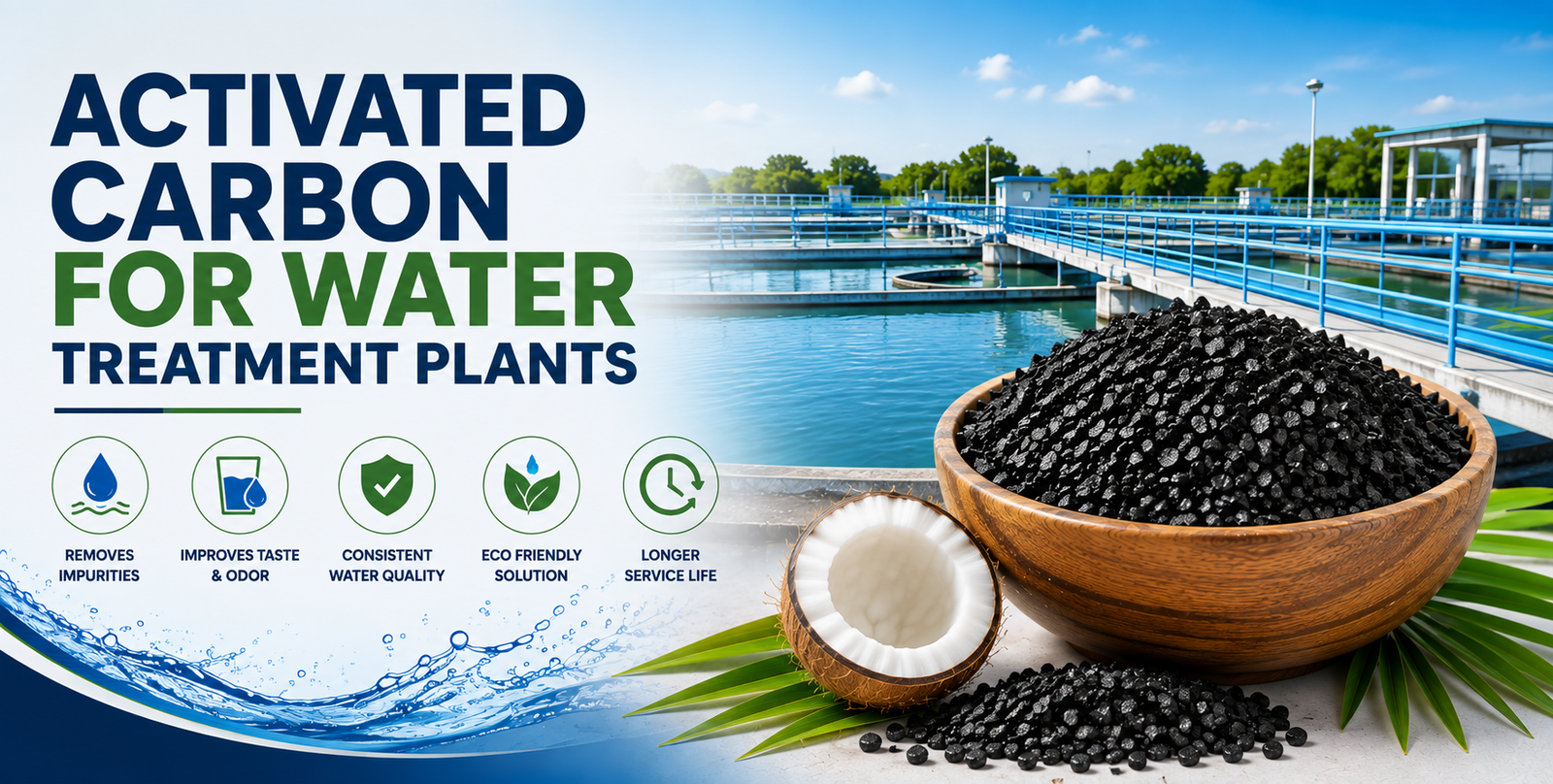
Introduction
Activated carbon is widely used in water-treatment systems to adsorb contaminants that may not be adequately addressed through conventional filtration.
Depending on the carbon grade, water chemistry, and operating conditions, activated carbon can help reduce chlorine, taste and odour compounds, dissolved organic contaminants, pesticides, volatile organic compounds (VOCs), colour-causing compounds, and selected industrial chemicals.
Treatment performance depends on several factors, including pore structure, particle size, adsorption characteristics, contact time, flow rate, and contaminant concentration. Choosing an Activated Carbon Supplier for Water Treatment Plants therefore involves evaluating both the product specification and the manufacturer’s ability to supply it consistently.
CG Carbon manufactures coconut shell activated carbon for municipal, industrial, and specialised water-treatment applications.
How Activated Carbon Works in Water Treatment
Activated carbon contains a highly porous internal structure that provides surface area for adsorption. As contaminated water comes into contact with the carbon, selected dissolved substances are adsorbed onto its internal surfaces.
- Chlorine and residual disinfectants
- Taste and odour compounds
- Dissolved organic contaminants
- Selected pesticides and herbicides
- Volatile organic compounds
- Colour-causing compounds
- Selected industrial chemicals
There is no single activated carbon grade suitable for every treatment system. Carbon selection should therefore be based on the contaminants being treated and the operating conditions of the system.
Why Raw Material Matters
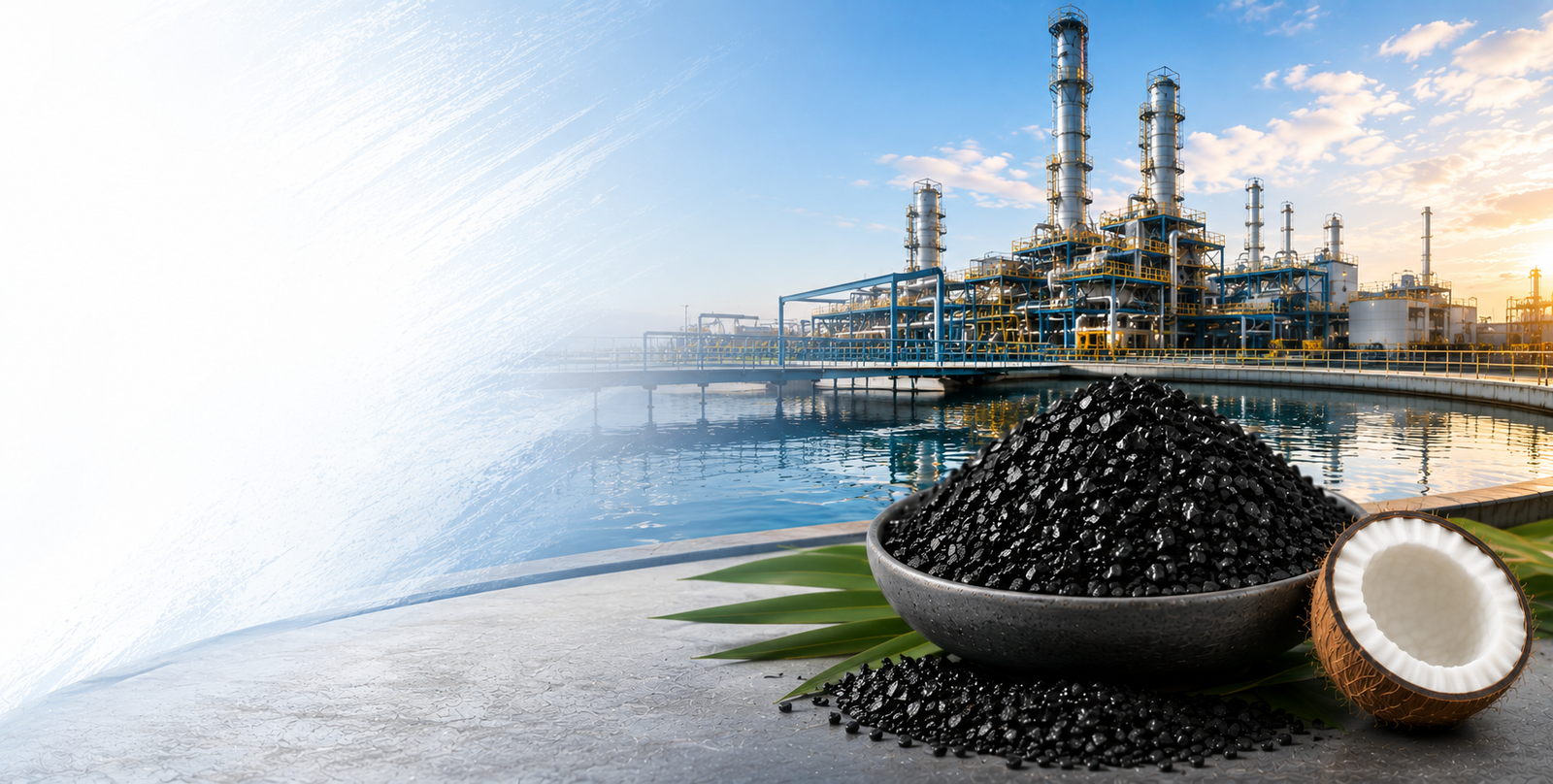
The characteristics of activated carbon begin with the raw material used in production. Coconut shell charcoal provides a dense carbon structure that can be developed through controlled activation.
Raw-material characteristics such as density, hardness, and consistency can influence the physical properties of the finished activated carbon. CG Carbon sources coconut shell charcoal from South India and Sri Lanka, with attention to these characteristics.
Water-Treatment Applications
Municipal Water Treatment
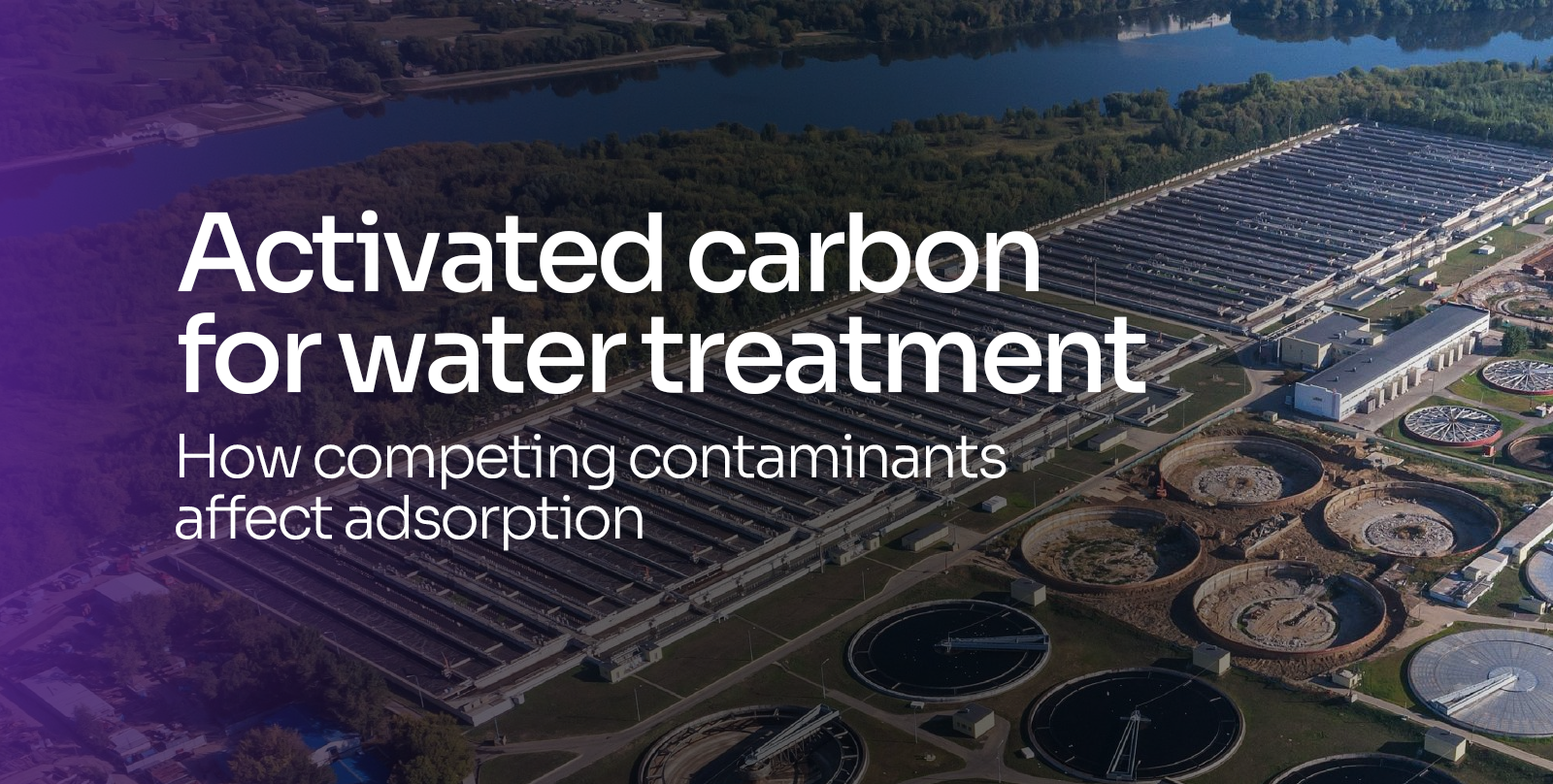
Activated carbon can be used in municipal treatment systems to help reduce chlorine, taste, odour, pesticides, and selected organic contaminants.
Industrial Water Treatment
Industrial facilities may use activated carbon as part of process-water treatment, particularly where dissolved organic contaminants need to be reduced before downstream purification stages.
Wastewater Treatment and Reuse
Activated carbon may be incorporated into tertiary or advanced treatment processes to reduce selected dissolved organic contaminants before discharge or reuse. Its suitability depends on wastewater composition and the treatment objective.
Food and Beverage Process Water
Activated carbon can support the treatment of process water where taste, odour, colour, or selected organic impurities need to be controlled.
Pharmaceutical Process Water
In pharmaceutical applications, activated carbon may form one stage of a broader purification system. The grade should be selected according to the required purity, process conditions, and applicable specifications.
Power and Utility Water Treatment
Activated carbon can also be used in utility-water systems where chlorine or selected organic contaminants need to be reduced before subsequent treatment stages.
Selecting the Right Activated Carbon
The appropriate carbon grade should be selected according to the actual treatment requirement.
- Target contaminants
- Contaminant concentration
- Iodine value or other relevant adsorption parameters
- Hardness
- Ash content
- Moisture
- Particle-size distribution
- Bulk density
- Contact time
- Flow conditions
- Water chemistry
- Treatment-system configuration
A single specification should not be used in isolation when determining product suitability.
Conclusion
Choosing an Activated Carbon Supplier for Water Treatment Plants involves more than comparing prices or reviewing a standard specification.
The suitability of the carbon, consistency between batches, manufacturing capability, and understanding of the treatment process all influence the effectiveness of a long-term supply arrangement.
For water-treatment operators, the objective should be to select activated carbon according to the contaminants, system configuration, and required treatment outcome.
Frequently Asked Questions
1. How should activated carbon be selected for water treatment?
Selection should consider the target contaminants, water chemistry, contact time, flow rate, treatment configuration, and required performance.
2. What contaminants can coconut shell activated carbon help reduce?
Depending on the carbon grade and operating conditions, it can help reduce chlorine, taste and odour compounds, selected organic contaminants, pesticides, VOCs, and colour-causing compounds.
3. How often should activated carbon be replaced?
There is no universal replacement interval. Service life depends on contaminant loading, water quality, flow rate, contact time, and the amount of carbon used.
4. What is the difference between GAC and PAC?
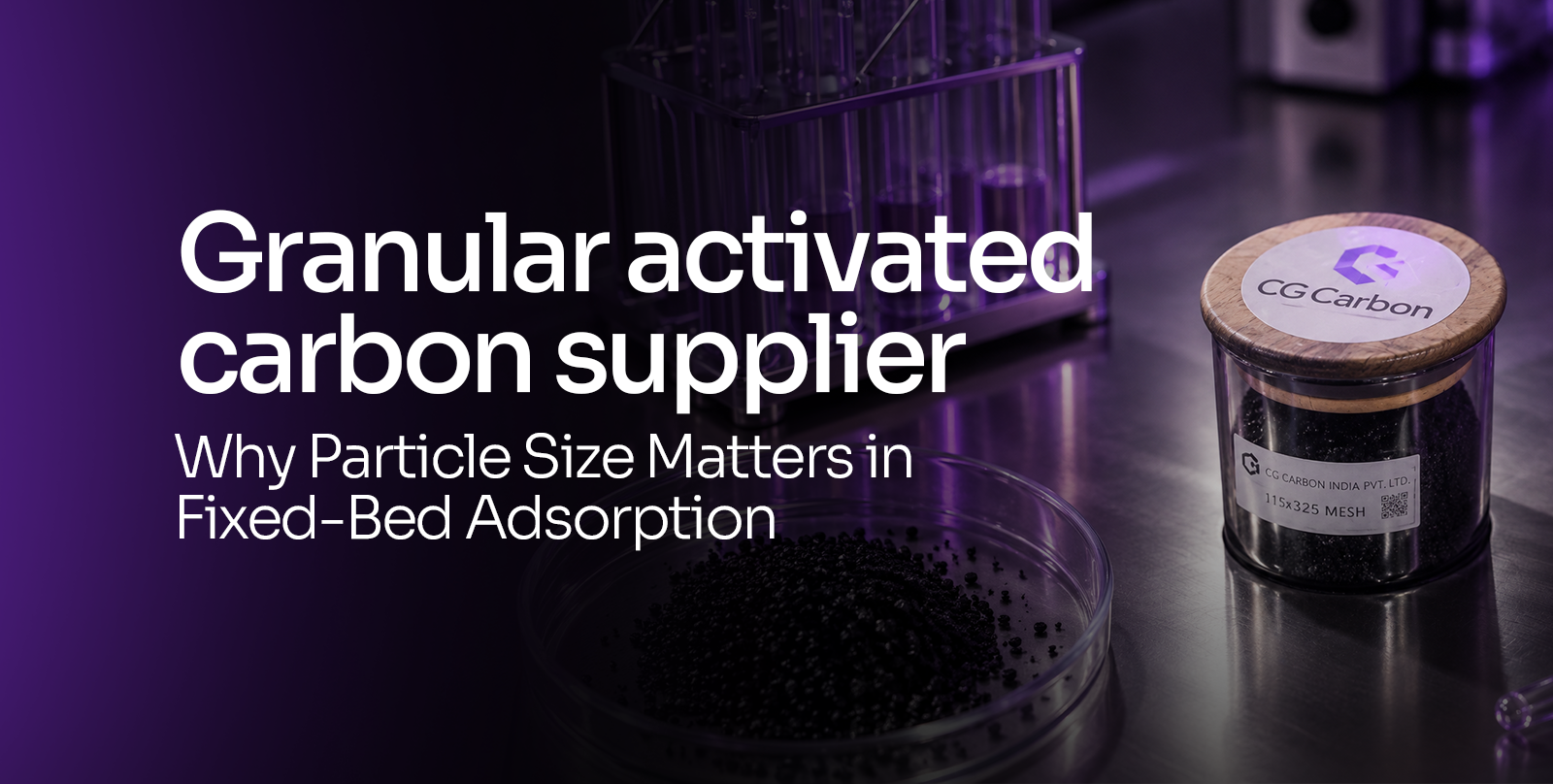
Granular Activated Carbon (GAC) consists of larger particles generally used in fixed-bed systems.
Powdered Activated Carbon (PAC) consists of finer particles that are typically dosed into the treatment stream and subsequently separated.
5. Can coconut shell activated carbon be used for wastewater treatment?
Yes, where the contaminants are suitable for adsorption. The appropriate grade should be selected according to wastewater characteristics and the required treatment outcome.