Industrial Activated Carbon Exporter from India: What Global Buyers Should Look For?
Industrial activated carbon supply depends on product consistency, technical specifications, manufacturing controls, and dependable export processes. This guide covers the key parameters, raw material considerations, industrial applications, quality checks, and export practices involved in sourcing coconut shell activated carbon from India, with insights into CG Carbon’s manufacturing and supply capabilities.
Introduction
Activated carbon is used in water treatment, air and gas purification, gold recovery, food and beverage processing, pharmaceuticals, and other industrial processes.
For international buyers, activated carbon procurement involves more than comparing prices. Product specifications, manufacturing consistency, production capability, documentation, and shipment planning can all influence supply performance.
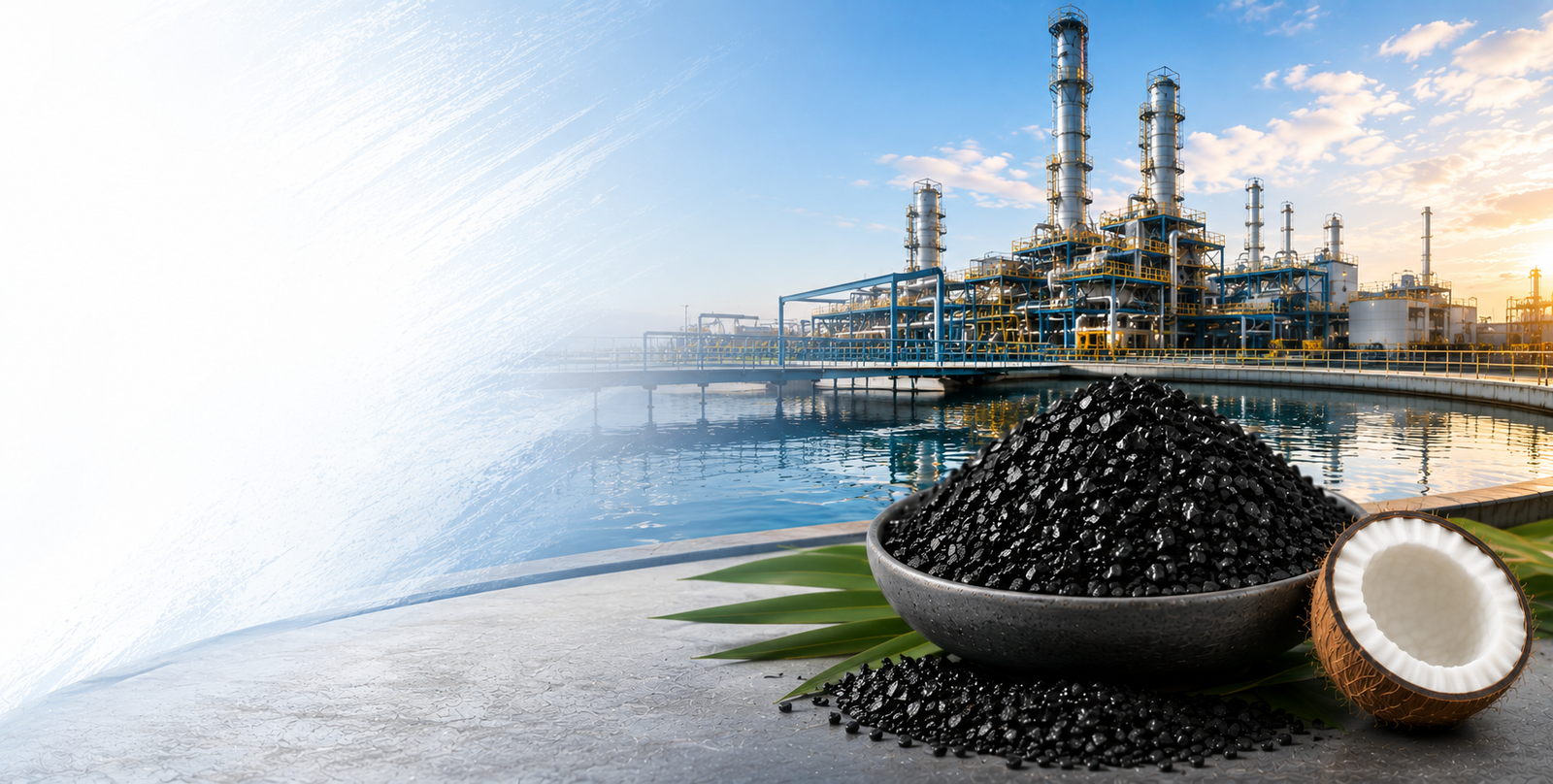
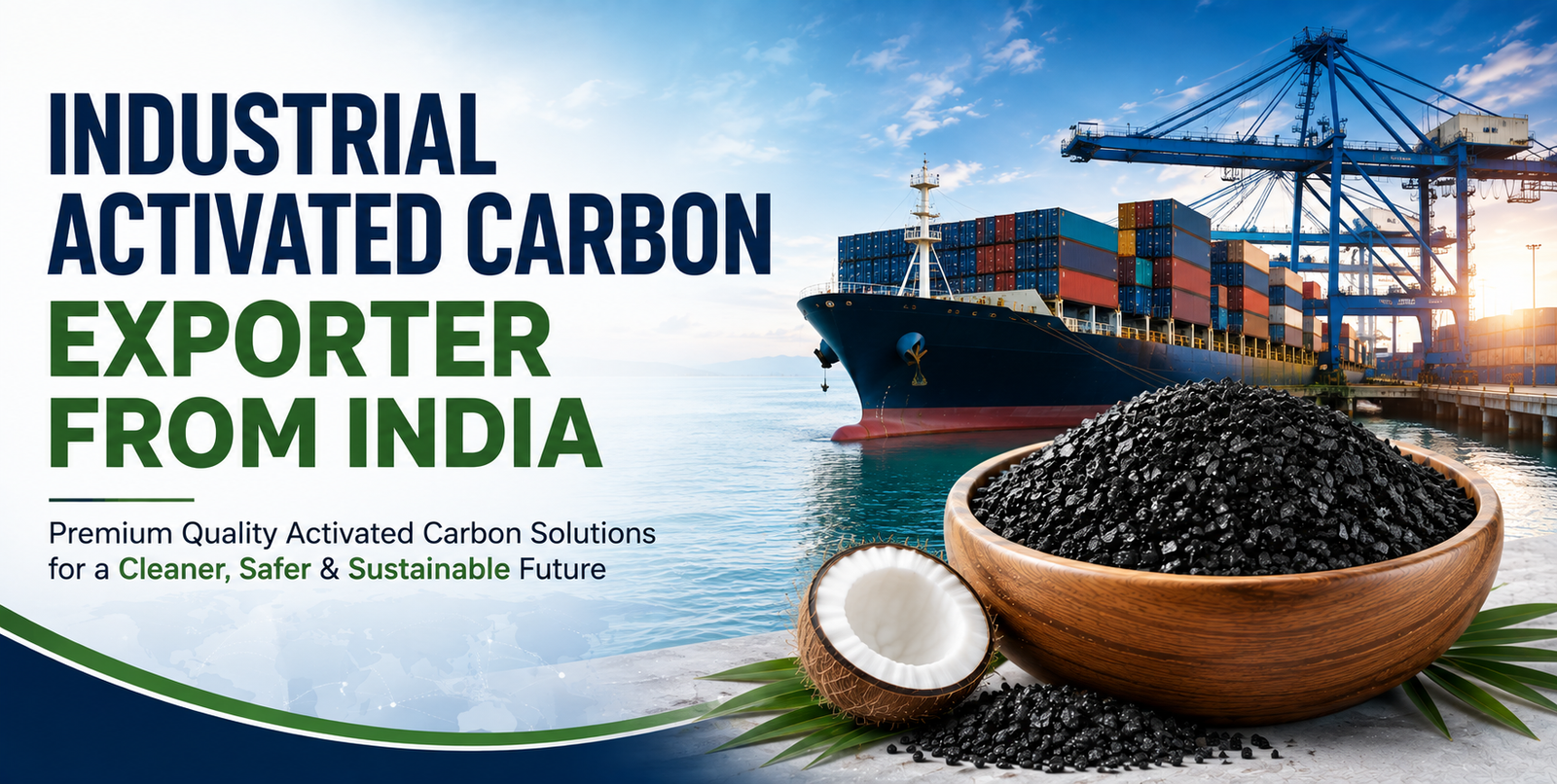
India is an established manufacturing and export base for coconut shell activated carbon. CG Carbon manufactures and exports coconut shell activated carbon from India for a wide range of industrial applications.
This article highlights the key factors buyers should consider when evaluating an Industrial Activated Carbon Exporter from India.
Activated Carbon as an Industrial Process Material
Activated carbon becomes part of the customer’s treatment, purification, or recovery process. Its suitability should therefore be evaluated according to the intended application rather than only by a general product description.
- Technical specifications
- Application requirements
- Batch consistency
- Required volumes
- Packaging
- Quality documentation
- Shipment schedules
Raw Material and Manufacturing
For coconut shell activated carbon, production begins with coconut shell charcoal. Characteristics such as density, hardness, and consistency of the charcoal can influence the properties developed during activation.
The manufacturing process typically includes activation, sizing, grading, testing, and packaging. Control across these stages helps manufacturers maintain defined product specifications.
Important Product Parameters
Depending on the application, buyers may evaluate:
- Iodine value
- Adsorption capacity
- Hardness
- Moisture
- Ash content
- Particle-size distribution
- Bulk density
- Application-specific adsorption performance
Marketing terms such as “premium” or “high-performance” should not replace measurable technical specifications.
Industrial Applications
Water and Wastewater Treatment
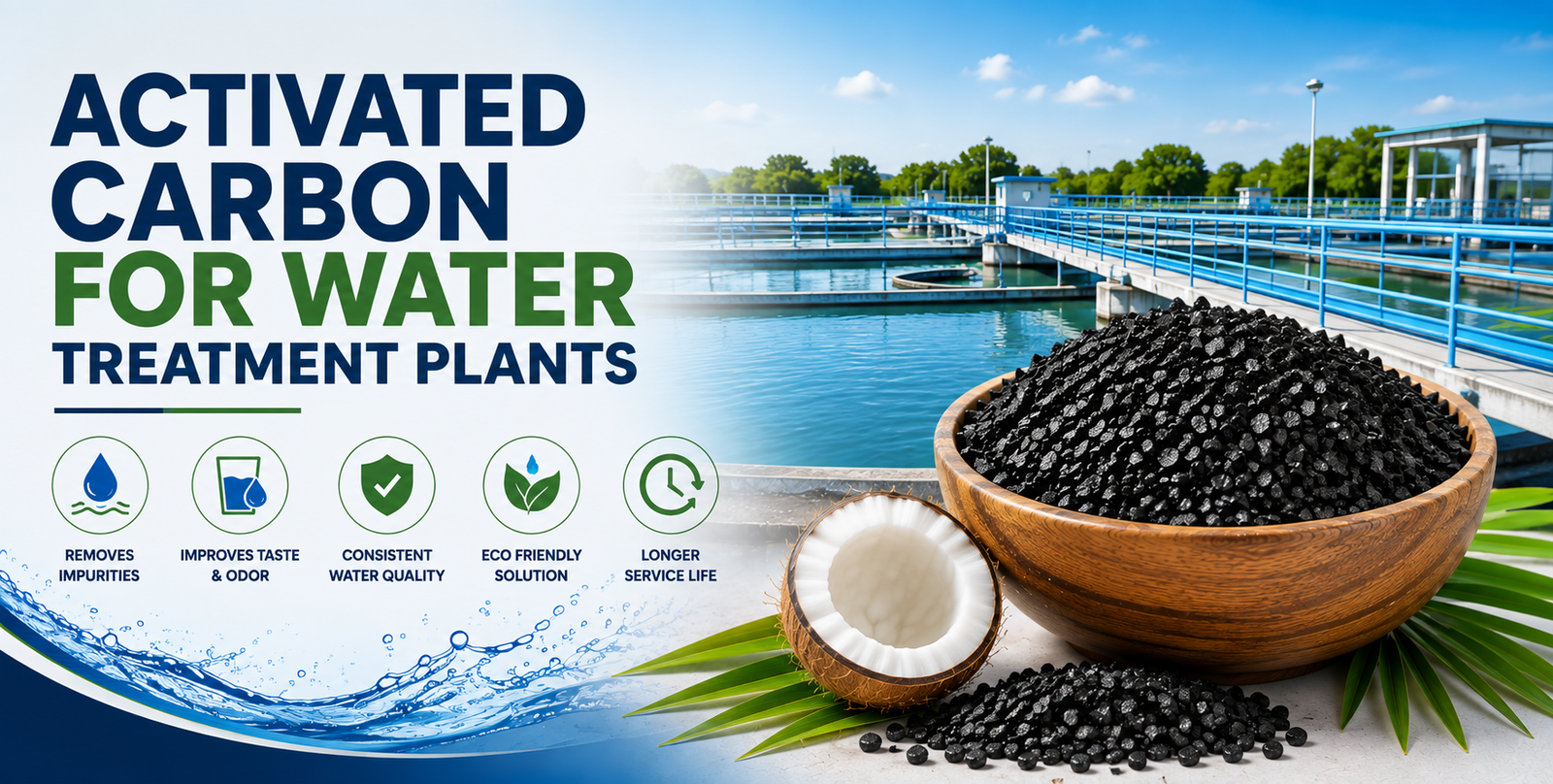
Activated carbon can help reduce chlorine, taste and odour compounds, and selected dissolved organic contaminants.
Air and Gas Purification
Activated carbon may be used for VOC control, odour reduction, and selected gas-treatment applications.
Food and Beverage Processing
Activated carbon can support purification and decolourisation processes where appropriate product specifications are required.
Pharmaceutical Processing
Activated carbon may be used in selected purification applications according to process and purity requirements.
Gold Recovery
Coconut shell activated carbon is widely used in Carbon-in-Pulp (CIP), Carbon-in-Leach (CIL), and Carbon-in-Column (CIC) circuits. Important characteristics include adsorption performance, hardness, attrition resistance, and particle-size distribution.
Oil, Gas and Automotive Applications
Activated carbon is also used in applications including gas purification, hydrocarbon vapour control, selected mercury-removal systems, EVAP systems, and cabin-air filtration. The appropriate grade depends on the specific application.
Five Questions Global Buyers Should Ask
1. Why do international buyers source activated carbon from India?
India has established coconut shell activated carbon manufacturing capabilities and access to international export infrastructure.
2. Which specifications should buyers compare?
Relevant parameters may include iodine value, CTC activity, hardness, ash, moisture, particle size, bulk density, and application-specific performance.
3. Can product specifications be customised?
Different grades or specifications can be selected or developed according to application requirements and manufacturing capability.
4. What should be checked before placing a bulk export order?
Buyers should review specifications, manufacturing capability, quality-control procedures, packaging, documentation, and shipment arrangements.
5. Which industries does CG Carbon serve?
CG Carbon supplies activated carbon for water treatment, air and gas purification, food and beverage, pharmaceuticals, gold recovery, oil and gas, automotive, tobacco, and specialised filtration applications.
CG Carbon’s Export Approach
CG Carbon manufactures coconut shell activated carbon for applications including:
- Water and wastewater treatment
- Air and gas purification
- Food and beverage processing
- Pharmaceuticals
- Gold recovery
- Oil and gas
- Automotive
- Tobacco
- PPE and specialised filtration
For international orders, the company coordinates production, testing, packaging, export documentation, and shipment planning. Product grades can be discussed according to the technical requirements of the customer’s application.
Conclusion
Choosing an Industrial Activated Carbon Exporter from India requires consideration of both the product and the manufacturer’s ability to support repeat international supply.
Buyers should evaluate measurable specifications, manufacturing controls, quality testing, production capability, and export coordination.
Clear technical requirements and structured supply planning provide a stronger basis for long-term international procurement.
Frequently Asked Questions
1. Why do international buyers source activated carbon from India?
India has established coconut shell activated carbon manufacturing capabilities and access to international export infrastructure.
2. Which specifications should buyers compare?
Relevant parameters may include iodine value, CTC activity, hardness, ash, moisture, particle size, bulk density, and application-specific performance.
3. Can product specifications be customised?
Different grades or specifications can be selected or developed according to application requirements and manufacturing capability.
4. What should be checked before placing a bulk export order?
Buyers should review specifications, manufacturing capability, quality-control procedures, packaging, documentation, and shipment arrangements.
5. Which industries does CG Carbon serve?
CG Carbon supplies activated carbon for water treatment, air and gas purification, food and beverage, pharmaceuticals, gold recovery, oil and gas, automotive, tobacco, and specialised filtration applications.