How Activated Carbon Is Used for Industrial Air Purification
The release of VOCs, chemical fumes, hydrocarbons, and unpleasant odours from industrial production and manufacturing processes can pose significant challenges to air quality, equipment protection, and regulatory compliance.
Activated carbon is commonly used in industrial air filtration systems due to its porous structure and ability to adsorb certain gaseous contaminants. Activated carbon for industrial air purification offers a practical solution for industries seeking to control pollutants in exhaust air and process gas streams. However, the effectiveness of this method largely depends on the type of carbon used, the nature of the contaminants, and the operating conditions.
How does Activated Carbon work?
Activated carbon is a highly porous material with an extensive internal surface area that enables it to capture certain gaseous contaminants through a process called adsorption. When contaminated air passes through an activated carbon bed, suitable gas molecules attach to the carbon’s surface and remain trapped within its pore structure. Over time, the carbon’s adsorption capacity decreases as the available sites become occupied. Depending on the application, the carbon must then be replaced or regenerated to maintain treatment efficiency. Activated carbon for industrial air purification helps industries control selected volatile organic compounds (VOCs), chemical vapours, and unpleasant odours in exhaust air and process gas streams.
The effectiveness of activated carbon depends on several factors, including the type and concentration of contaminants, temperature, humidity, airflow rate, and contact time.
Choosing the right type of activated carbon for each application is crucial for efficient contaminant removal and reliable performance.
Industrial Applications of Activated Carbon for Air Purification
- Chemical and Petrochemical Process Industry
The chemicals and petrochemical process industries could generate solvents, hydrocarbons, and VOCs in their processing systems. This would be managed through the use of activated carbon adsorption systems that adsorb appropriate vapours from the exhaust gases for vapour control.
- Paints, Coatings, and Printing Process
In this kind of industrial process, there could be emissions of solvent-based pollutants that cause air pollution and odours. Activated carbon adsorption systems can be used to remove appropriate organic vapours.
- Wastewater Treatment Plants
Wastewater treatment plants might emit odours that arise from some chemicals in the wastewater through the processes involved. Some selected types of activated carbon can be used to control such gaseous compounds.
- Oil and Gas
Processes involving oil and gas may lead to emissions of hydrocarbon gases through storage and refining processes. Activated carbon may be used in gas treatment systems which collect the appropriate organic compounds.
- Food and Beverage Processing
Food and beverage production processes such as cooking, roasting and fermentation may emit odorous gases. These may be controlled using activated carbon in gas exhaust treatment systems.
Factors to Consider When Choosing Activated Carbon
Selecting activated carbon for industrial air purification involves assessing the technical requirements of the particular process.
These factors are:
- Pore structure: It affects adsorption of different contaminants.
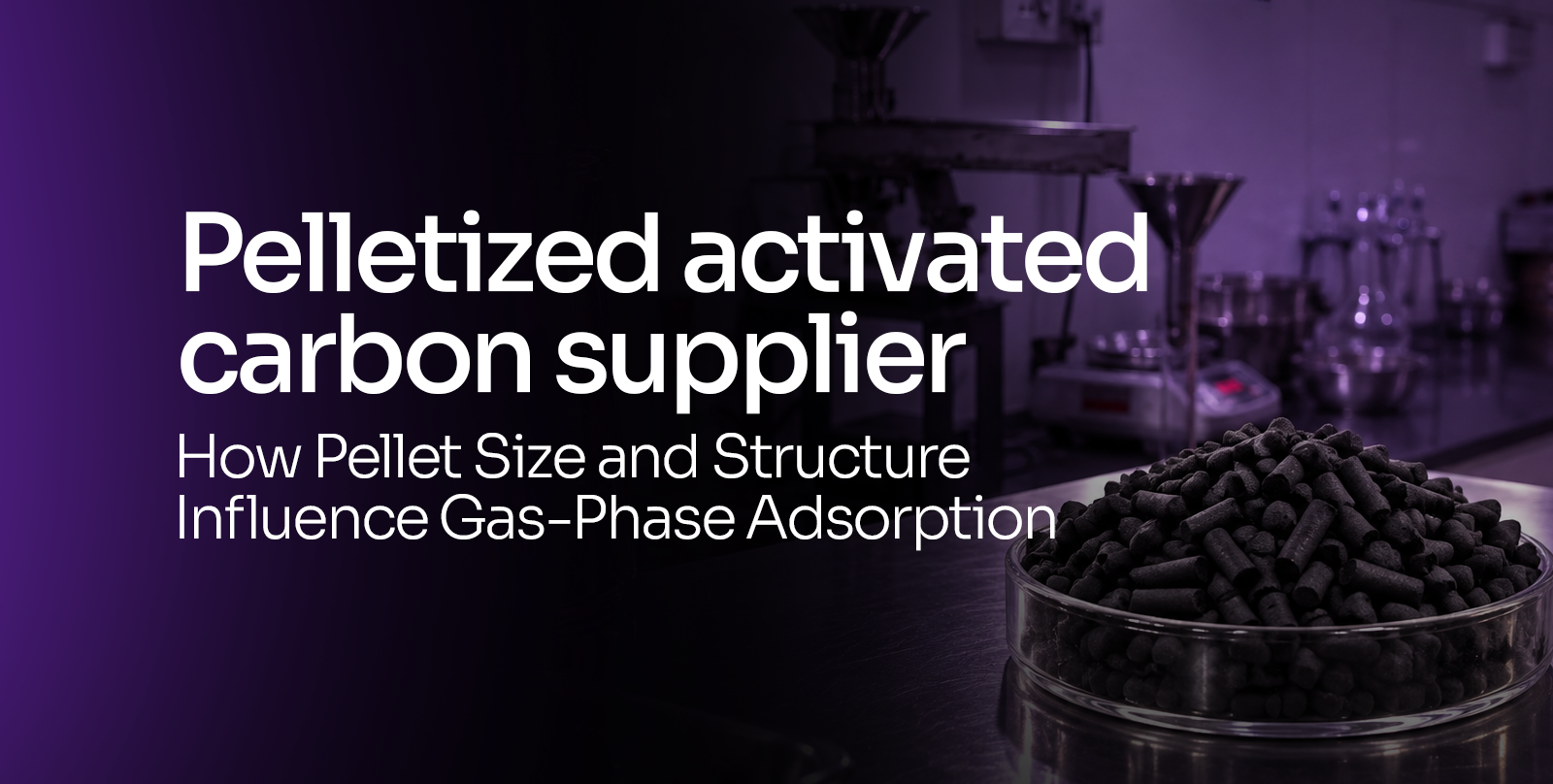
- Particle size: This affects the flow of air and pressure, as well as contact between the gas molecules and the carbon particles.
- Strength: It helps to preserve the bed of carbon throughout the process.
- Temperature and humidity: They affect adsorption behaviour and treatment efficiency.
- Concentration of contaminant: It determines the adsorption load.
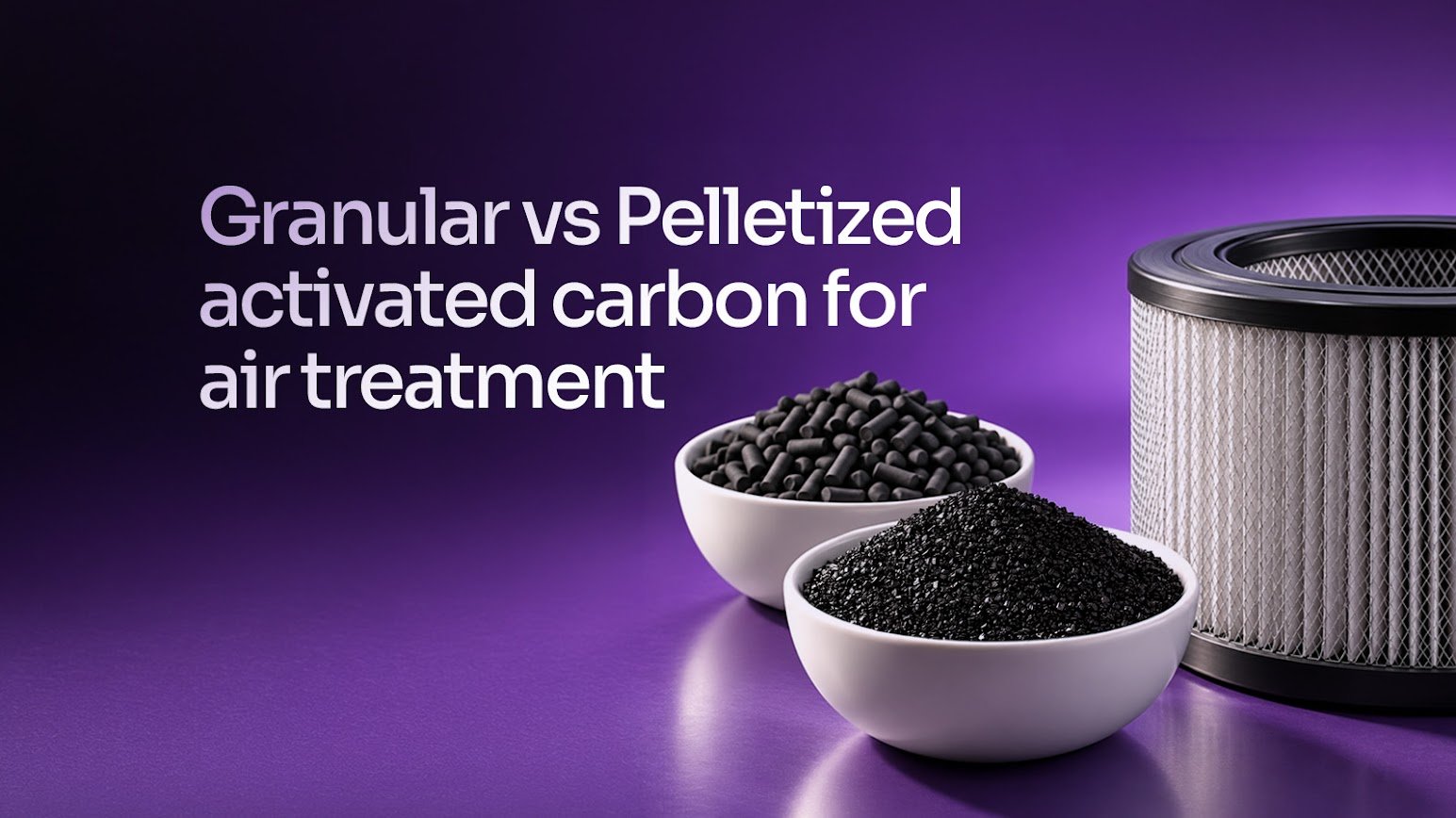
Pelletized activated carbon is normally used in gas-phase operations owing to the consistent shape that allows the flow of air at low pressure drop. Granular and impregnated activated carbons are applicable in other applications depending on the target contaminants.
Why Choose CG Carbon?
CG Carbon helps businesses explore suitable activated carbon products for applications involving activated carbon for industrial air purification, depending on their specific process requirements
Carbon selection should be based on its application, the contaminants involved, and what is expected from the purification equipment. In the case of gases, it is necessary to ensure that the suitable carbon grade has the right adsorption properties.
Businesses have the freedom to investigate the products that are available and consult with the supplier regarding their needs. The products that CG Carbon offers include pelletized activated carbon, which might be considered by various companies as a solution for gas and vapour treatment processes.
Conclusion
Industrial air purification is one of the most important elements in ensuring proper working conditions, as well as controlling emissions resulting from the processes of production and manufacturing. Activated carbon is a solution to reduce many types of pollutants, vapours, and unwanted odours with the use of adsorption technology when applicable. It allows its application in various industries including chemical and petrochemical, printing, water treatment, the oil and gas industry, and food processing. Nevertheless, obtaining good results using this method demands much more than placing the carbon filter into the system. Industries have to be aware of the source of emissions, choose the correct grade of carbon, consider humidity and temperature, and have sufficient contact time and flow control.
Inspection and timely replacement of carbon are also important in keeping up performance because of exhaustion of adsorptive ability. Through working with an experienced supplier and analysing the needs of each particular application, companies can make better choices regarding their air treatment systems. By selecting a proper product and designing the system properly, activated carbon used for industrial air purification can be helpful in dealing with odours and controlling chosen air contaminants.