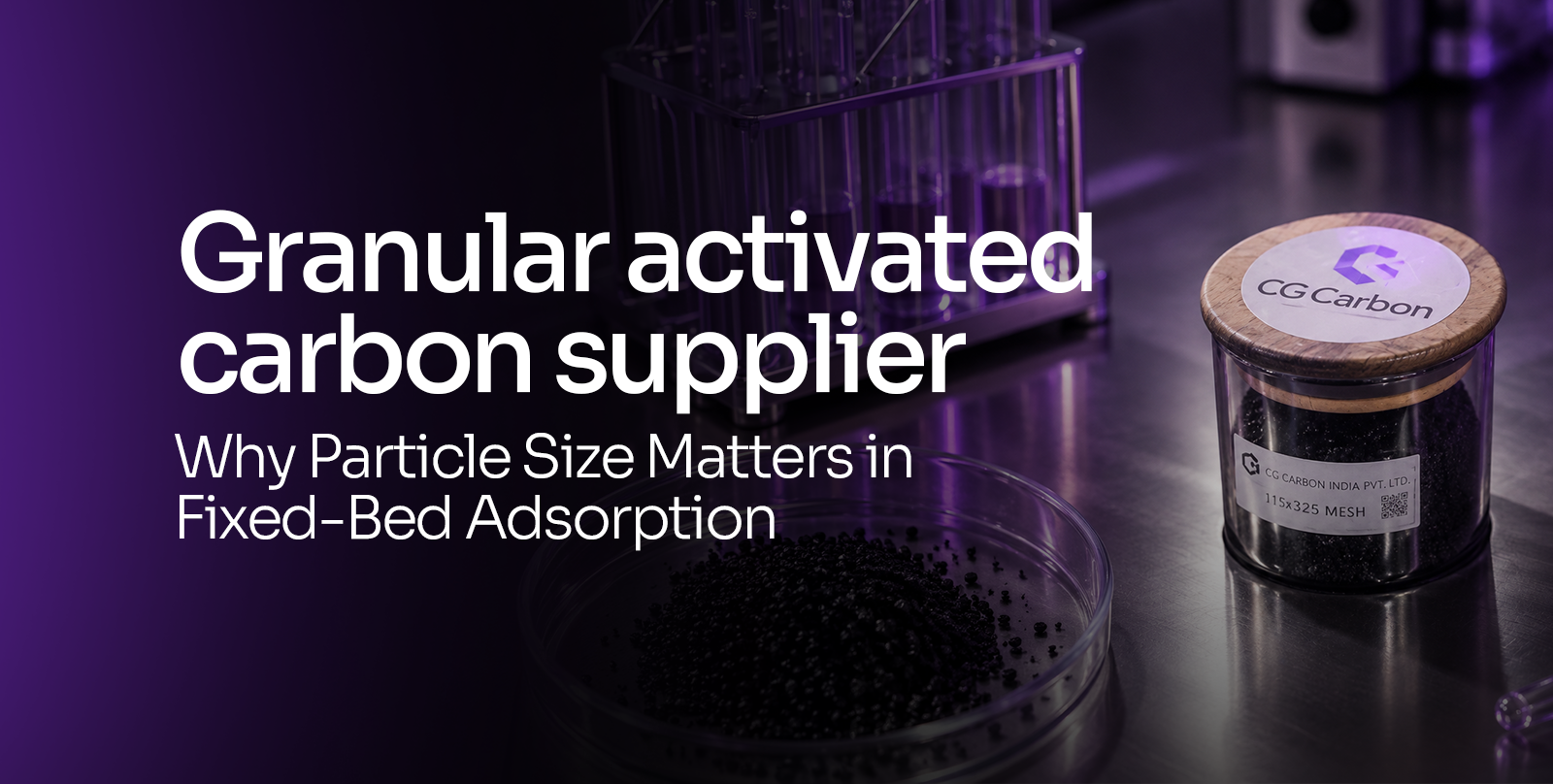
Granular Activated Carbon Supplier: Why Particle Size Matters in Fixed-Bed Adsorption

One important factor is particle size. Particle size affects pressure drop, mass transfer, flow distribution, adsorption kinetics, and carbon handling. Choosing the right size is therefore not simply about selecting finer or coarser granules. It is about finding a specification that suits the application and the treatment system. For buyers evaluating a Granular Activated Carbon Supplier, understanding this relationship can make carbon selection more precise and application-focused.

What Is Particle Size in Granular Activated Carbon?

Granular activated carbon is available in different particle size ranges, commonly specified through mesh sizes or millimetres. Particle size refers to the physical dimensions of the individual carbon granules within the bed. These dimensions influence how fluid moves through the bed and how contaminants travel through the carbon particles. Smaller particles generally provide shorter diffusion paths. Larger particles can offer different hydraulic and mechanical characteristics. Neither is universally better. The appropriate size depends on the application, contaminant characteristics, system configuration, and operating conditions.

How Particle Size Affects Adsorption

Adsorption occurs when contaminants move from the fluid phase onto the surface and pore structure of activated carbon. Before reaching internal adsorption sites, contaminant molecules must move through the carbon particle. Particle size can influence the distance they need to travel. Smaller particles can provide shorter internal diffusion paths. Under suitable conditions, this may support faster mass transfer and adsorption kinetics. However, adsorption performance cannot be determined by particle size alone. Carbon pore structure, contaminant properties, concentration, temperature, fluid characteristics, and operating conditions also influence adsorption. This is why particle size should be considered alongside the other properties of the carbon.

Particle Size and Pressure Drop

Pressure drop is an important consideration in fixed-bed systems. As fluid passes through a packed carbon bed, resistance develops around the particles. Smaller particles generally create greater resistance because the spaces between individual granules are smaller. As particle size decreases, pressure drop can therefore increase under comparable bed and flow conditions. This can affect pumping requirements and system operation. For an existing treatment system, switching to a significantly finer carbon without considering hydraulic limitations may create operational challenges. A suitable particle size should therefore balance adsorption requirements with the pressure-drop limits of the system.

The Role of Mass Transfer

Mass transfer describes how contaminants move from the bulk fluid toward and into the activated carbon. This process influences how quickly adsorption capacity can be utilised. Smaller carbon particles can reduce the distance that contaminants need to travel within each particle. This may support faster access to adsorption sites under suitable operating conditions. Larger particles can have longer diffusion paths. However, the actual impact depends on the complete adsorption system. Particle size interacts with pore structure, contaminant molecule size, concentration, temperature, flow conditions, and other factors. So, particle size should not be treated as a standalone measure of adsorption performance.

Finding the Right Balance

The goal is not to choose the smallest carbon particle available. The goal is to choose a particle size that fits the treatment application. For some systems, faster mass transfer may be an important consideration. For others, pressure drop, mechanical strength, bed configuration, or handling requirements may carry greater importance. This balance becomes especially relevant in continuous fixed-bed applications where carbon remains in service for extended periods. The right selection considers both adsorption behaviour and hydraulic performance.

Particle Size Is Not Pore Size

Particle size and pore size are two different properties. Particle size refers to the physical dimensions of the carbon granules. Pore size refers to the internal pore network within those granules. A relatively large carbon particle can contain a highly developed pore structure. Similarly, reducing the external particle size does not automatically change the internal pore structure. Adsorption depends heavily on how the carbon’s pore structure interacts with the target molecules. For this reason, buyers should evaluate particle size together with relevant adsorption and physical properties.

What Buyers Should Discuss With a Supplier

When choosing a Granular Activated Carbon Supplier, buyers should provide information about the actual treatment application. Useful details may include:
  • Treatment medium
  • Target contaminants
  • Inlet concentration
  • Required outlet quality
  • Flow conditions
  • Bed dimensions
  • Operating temperature
  • Pressure limitations
  • Required service life
  • Carbon replacement or reactivation plans
This information gives the supplier a better understanding of the application. It also helps move the discussion beyond a standard carbon specification and towards a more suitable product selection.

CG Carbon’s Approach to Carbon Selection

CG Carbon manufactures activated carbon solutions for industrial applications, with a focus on application-specific requirements. As a Granular Activated Carbon Supplier, CG Carbon supports customers in selecting carbon based on factors such as contaminant characteristics, treatment requirements, and the intended operating environment. The focus is not simply on supplying a particular particle size. Particle size needs to work alongside the carbon’s adsorption characteristics and physical properties. Depending on the application, considerations such as pore structure, hardness, ash content, and particle size distribution may all be relevant. This application-focused approach helps customers evaluate carbon based on how it is expected to perform within their treatment process.

Why Particle Size Distribution Matters

The stated particle size range is important, but consistency within that range also deserves attention. A broad or inconsistent distribution can influence how particles pack inside the bed. This can affect void spaces, fluid movement, pressure drop, and overall bed behaviour. Consistent granular characteristics can therefore contribute to more predictable handling and system performance. For industrial applications, this becomes particularly relevant when carbon is used in larger treatment beds or under continuous operating conditions. A Granular Activated Carbon Supplier should be able to provide relevant particle size specifications and discuss how they relate to the intended application.

Selecting Carbon for Fixed-Bed Applications

Particle size is only one part of the carbon-selection process. A complete evaluation should consider: Adsorption properties How effectively the carbon can interact with the target contaminants. Pore structure Whether the available pore network is suitable for the molecules being treated. Particle size How the granule dimensions may influence mass transfer and hydraulic behaviour. Mechanical strength How well the carbon withstands handling and operating conditions. System compatibility Whether the selected carbon fits the equipment and operating limitations. At CG Carbon, these factors can be considered when supporting customers with carbon selection for their specific treatment requirements.

Conclusion

Particle size plays an important role in fixed-bed adsorption. It can influence mass transfer, pressure drop, bed behaviour, and carbon handling. But smaller does not automatically mean better. The right particle size depends on the relationship between the carbon, contaminants, and treatment system. For buyers, the important question is not simply: “What particle size should we buy?” It is: “Which particle size is appropriate for our application?” Working with a Granular Activated Carbon Supplier that understands both carbon characteristics and application requirements can help customers make a more informed selection. For CG Carbon, the focus is on supplying activated carbon suited to the customer’s specific requirements while providing practical guidance around carbon selection. Because effective carbon selection starts with understanding how the carbon needs to perform inside the process.

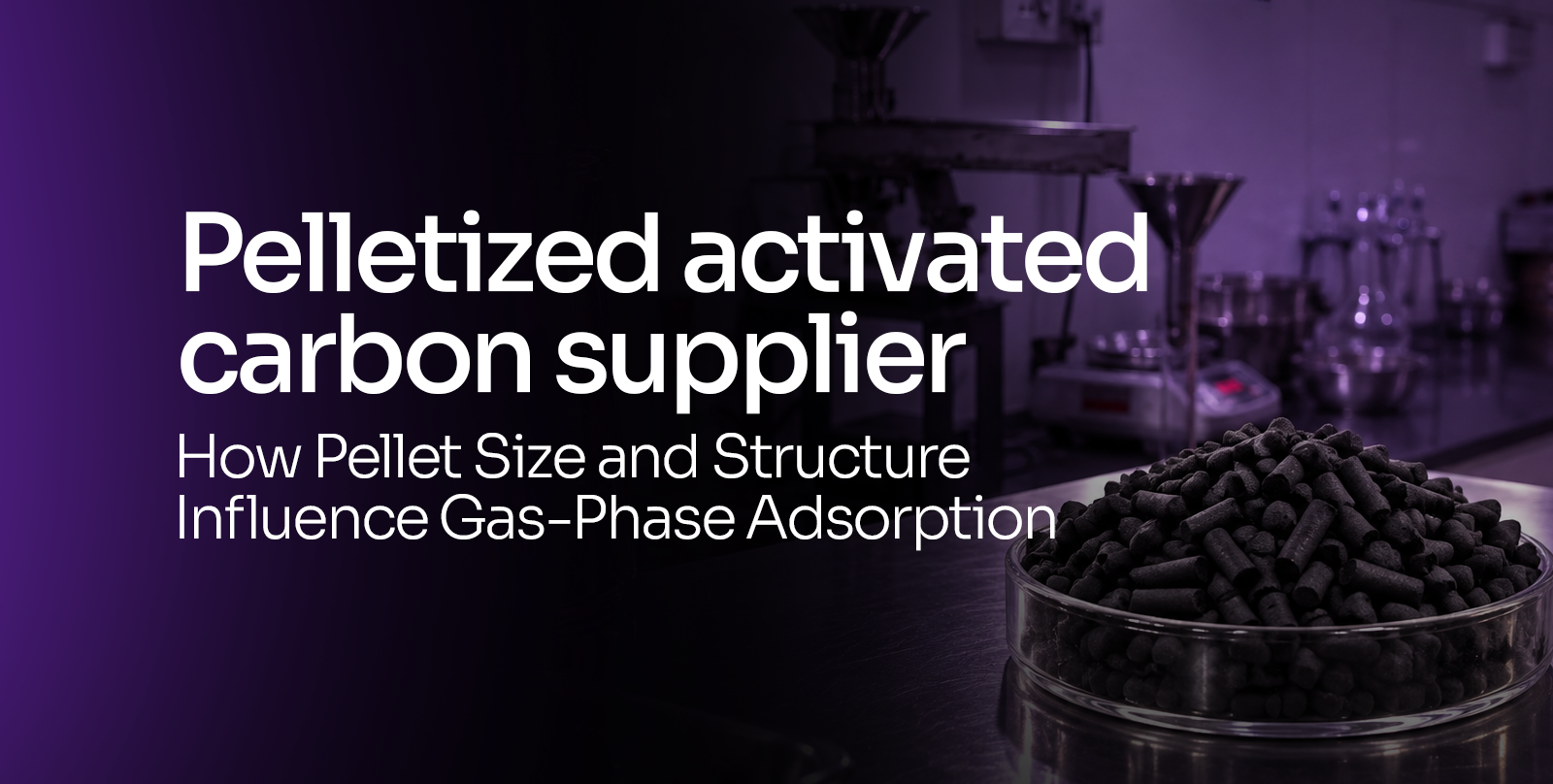
Pelletized Activated Carbon Supplier: How Pellet Size and Structure Influence Gas-Phase Adsorption

In industrial gas treatment, activated carbon is often used to remove VOCs, odours, hydrocarbons, and other unwanted compounds from process air and gas streams. For these applications, carbon geometry matters. Pelletized activated carbon is manufactured into cylindrical or similarly shaped particles with controlled dimensions. Unlike irregular granular carbon, pellets offer a more consistent shape and size throughout the treatment bed. That physical structure can influence pressure drop, gas distribution, mass transfer, mechanical stability, and ultimately how the carbon bed operates. For industries evaluating a Pelletized Activated Carbon Supplier, understanding these factors is important when selecting carbon for gas-phase applications.

Why Pelletized Carbon Is Used in Gas Treatment

Gas-phase adsorption systems often operate continuously and may handle significant volumes of air or process gas. The carbon bed therefore needs to provide sufficient adsorption capacity without creating excessive resistance to gas flow. Pelletized carbon can offer a more uniform bed structure because the particles have controlled dimensions and geometry. This can help create predictable pathways for gas movement through the bed. Pellets are also commonly used where pressure drop and mechanical durability are important considerations. The suitability of a pellet, however, depends on more than its shape. Its pore structure, hardness, diameter, density, and adsorption characteristics all influence how it behaves in an operating system.

Pellet Diameter and Gas Flow

Pellet diameter has a direct relationship with the spaces through which gas travels inside a packed bed. Smaller pellets generally provide shorter distances for molecules to travel into the carbon. They can support faster mass transfer under suitable conditions. However, smaller pellets can also increase resistance to gas flow. Larger pellets can reduce resistance and support lower pressure drop, but the increased diffusion distance may influence adsorption kinetics. This creates an engineering balance. The objective is not to choose the smallest or largest pellet available. The objective is to select a pellet dimension that fits the gas flow, equipment configuration, contaminant profile, and operating limitations. For an industrial carbon bed, this balance can be just as important as the carbon’s adsorption capacity.

Pellet Structure and Internal Diffusion

The external dimensions of a pellet tell only part of the story. Inside each pellet is a network of pores where adsorption takes place. Gas molecules must move through this structure before reaching available adsorption sites. The accessibility of these pores depends on the relationship between the pore structure and the molecules being treated. For example, a carbon designed for a particular gas-phase application may require a pore structure capable of effectively interacting with the target compounds. Pellet geometry and internal pore structure therefore work together. A well-designed pellet must provide practical gas flow characteristics while maintaining an internal structure suitable for adsorption.

Mechanical Strength Matters in Continuous Operation

Industrial carbon beds can remain in operation for extended periods. During loading, unloading, vibration, gas flow, and replacement, pellets experience mechanical stress. Weak pellets can break down and generate fines. Excessive fines can affect bed resistance and may interfere with downstream equipment. Pellet strength is therefore an important consideration when selecting carbon for industrial gas treatment. Hardness and attrition resistance should be evaluated according to the expected handling and operating conditions. For systems where carbon is frequently replaced or regenerated, mechanical durability can become particularly significant because the carbon may experience repeated physical handling.

Bed Depth and Gas Distribution

Pelletized carbon does not operate as individual particles in isolation. The pellets form a packed bed, and the way that bed is loaded can influence gas distribution. Poor distribution can result in sections of the bed receiving more gas than others. This can create uneven carbon utilisation and cause some areas to approach exhaustion faster than the rest of the bed. Pellet consistency can contribute to more predictable packing characteristics, but equipment design and gas distribution remain important. The carbon supplier therefore needs to understand the intended application rather than recommending pellets based only on a standard specification.

The Importance of Bulk Density

Bulk density is another physical property relevant to pelletized carbon. It describes the mass of carbon occupying a given volume, including the spaces between particles within the packed material. Bulk density can influence how much carbon is loaded into a specific vessel and can be relevant when calculating carbon inventory and handling requirements. However, a higher bulk density does not automatically indicate better adsorption performance. It must be considered alongside adsorption capacity, pore structure, pellet dimensions, moisture content, and other relevant properties. Industrial buyers should therefore avoid using a single physical parameter as the sole basis for carbon selection.

Matching Pellets to the Contaminant

Gas-phase treatment can involve very different contaminants. VOCs, solvent vapours, hydrocarbons, odour-causing compounds, and other gaseous impurities can behave differently during adsorption. Their molecular characteristics influence how they interact with activated carbon. This means the same pellet specification may not provide the same results across every gas stream. The concentration of the contaminant also matters. A system treating a low-concentration emission stream can have very different requirements from one handling a concentrated process stream. Temperature and humidity can also influence adsorption behaviour. A proper carbon selection process therefore starts with understanding the gas stream.

Humidity and Competitive Adsorption

Water vapour can be an important consideration in gas-phase adsorption. Depending on the carbon and the application, moisture may occupy adsorption sites or influence how certain compounds move through the pore structure. This can affect the available capacity for target contaminants. For this reason, gas humidity should be considered when selecting pelletized carbon for industrial applications. Other compounds within the gas stream can also compete for available adsorption sites. A carbon bed treating a mixed gas stream may therefore behave differently from one treating a single contaminant. Understanding the complete gas composition helps create a more realistic basis for carbon selection.

What an Industrial Buyer Should Share With a Supplier

When approaching a Pelletized Activated Carbon Supplier, buyers should provide enough information to understand the actual treatment requirement. Important details may include:
  • Gas composition
  • Target contaminants
  • Contaminant concentration
  • Gas flow rate
  • Operating temperature
  • Relative humidity
  • Existing vessel dimensions
  • Carbon bed depth
  • Allowable pressure drop
  • Expected operating cycle
  • Carbon replacement requirements
These details allow the carbon specification to be considered in relation to the application. They also help prevent the selection process from becoming a comparison based only on catalogue values.

CG Carbon’s Approach to Pelletized Carbon

CG Carbon supports industrial customers with activated carbon solutions based on specific treatment requirements. As a Pelletized Activated Carbon Supplier, CG Carbon can help customers evaluate relevant carbon characteristics for gas-phase applications, including pellet dimensions, physical strength, adsorption properties, and application requirements. The objective is not to recommend a pellet simply because it has a particular size or specification. Gas-phase adsorption involves several connected variables. The carbon needs to be considered alongside the contaminant, gas conditions, vessel configuration, and operational requirements. This application-focused approach allows carbon selection to begin with the treatment challenge rather than a generic product specification.

Selecting the Right Pellet Structure

Pellet selection should consider the complete operating environment. A suitable pellet needs to balance: Gas flow The pellet dimensions should be compatible with the system’s hydraulic requirements. Mass transfer The structure should allow target molecules to access relevant adsorption sites effectively. Mechanical strength The pellets should withstand handling and expected operating conditions. Pore structure The available pore network should be appropriate for the target compounds. Operating conditions Temperature, humidity, concentration, and gas composition can influence adsorption behaviour. For a Pelletized Activated Carbon Supplier, understanding these relationships is essential when supporting industrial applications.

Conclusion

Pelletized activated carbon is more than activated carbon formed into a convenient shape. Pellet diameter, geometry, pore structure, density, and mechanical strength can all influence how a carbon bed performs in gas-phase treatment. Smaller pellets may support favourable mass transfer characteristics but can increase resistance to gas flow. Larger pellets can offer different hydraulic advantages while changing diffusion behaviour. The right choice depends on the application. For industrial buyers, selecting a Pelletized Activated Carbon Supplier should therefore involve more than comparing particle dimensions or adsorption numbers. The better approach is to evaluate the pellet as part of the complete gas-treatment system. At CG Carbon, application requirements remain central to carbon selection, helping customers identify activated carbon characteristics that are appropriate for their specific gas-treatment needs. Because in gas-phase adsorption, the pellet’s performance depends on how its structure works within the process.

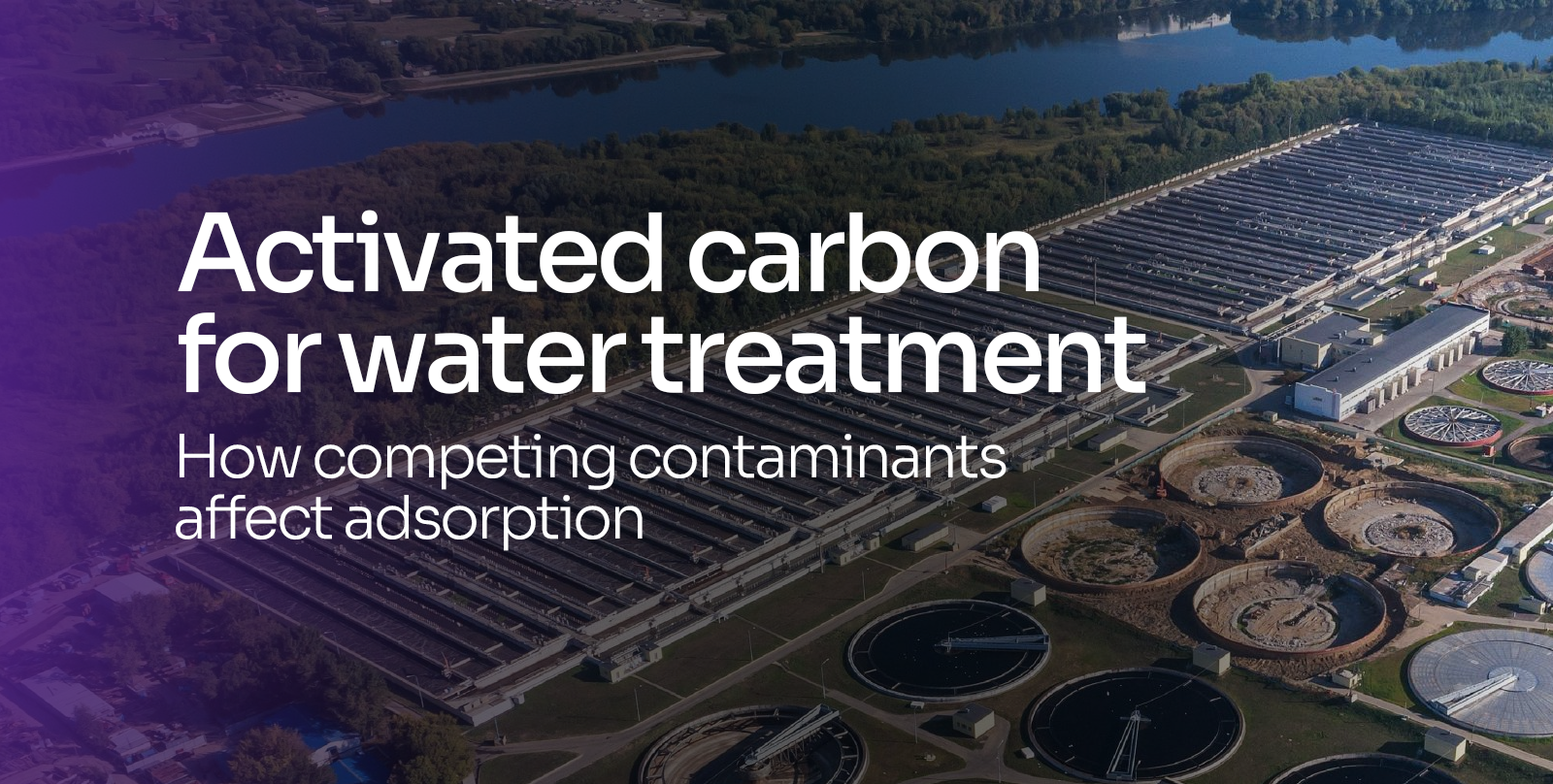
Activated Carbon for Water Treatment: How Competing Contaminants Affect Adsorption

A feed stream may contain several dissolved organic compounds, natural organic matter, and other substances simultaneously. When activated carbon for water treatment is introduced into this environment, different compounds may compete for adsorption capacity. This phenomenon, known as competitive adsorption, can influence how effectively activated carbon removes a particular target contaminant. Understanding this interaction is particularly important in industrial water-treatment systems, where water composition can change over time.

What Is Competitive Adsorption?

Activated carbon provides a highly porous internal surface on which certain contaminants can adsorb. Adsorption is influenced by factors such as molecular characteristics, concentration, pore structure, carbon surface properties, water chemistry, and operating conditions. In a water stream containing several adsorbable compounds, these substances do not receive equal priority simply because one of them is the target contaminant. Some molecules may have a stronger affinity for the carbon surface than others. As a result, compounds can compete for the available adsorption capacity. For example, a treatment system designed to reduce a specific organic contaminant may also contain natural organic matter. If some of that natural organic matter is adsorbed by the carbon, less capacity may remain available for the target compound. This is competitive adsorption.

Why Water Composition Matters

The performance of activated carbon depends on both the carbon and the water being treated. Relevant water characteristics may include:
  • Type of contaminants
  • Contaminant concentration
  • Molecular size
  • Molecular structure
  • Polarity
  • pH
  • Natural organic matter
  • Temperature
  • Flow conditions
  • Contact time
When several compounds are present, their relative concentrations and affinities can influence which substances are adsorbed preferentially. This explains why the same activated carbon can perform differently in two treatment systems. The carbon may be identical, but the feedwater composition and operating conditions may not be.

How Competition Affects Available Adsorption Capacity

Activated carbon has a finite adsorption capacity under a given set of operating conditions. In a relatively simple water stream, a larger proportion of that capacity may be available for the target contaminant. In a complex stream, several compounds may contribute to the total adsorption demand. Some competing compounds may be more strongly adsorbed than the target substance. Others may simply be present at much higher concentrations. Either situation can change the effective capacity available for the contaminant the treatment system is intended to control.

The Role of Natural Organic Matter

Natural organic matter is particularly relevant in many surface-water and untreated-water sources. It can consist of a complex mixture of organic compounds. Some of these compounds can interact with activated carbon and influence the adsorption of other contaminants. The effect depends on several factors, including:
  • Concentration of natural organic matter
  • Molecular characteristics
  • Pore structure of the carbon
  • Target contaminant
  • Contact time
  • Water chemistry
This is one reason why carbon performance measured using a simple laboratory solution may differ from performance in actual feedwater.

Molecular Characteristics Influence Adsorption

Molecular Size

Pore accessibility is important. A molecule must be able to access suitable pores before effective adsorption can occur.

Chemical Characteristics

Polarity and other molecular properties influence the interaction between the contaminant, water, and carbon surface.

Concentration

Higher contaminant concentrations generally create greater adsorption demand. When several substances are present simultaneously, their combined behaviour determines how the available carbon capacity is used.

Why Laboratory Results Need Context

Laboratory testing remains valuable for characterising activated carbon. However, controlled testing conditions cannot always reproduce the complexity of an operating water-treatment plant. Actual feedwater may contain:
  • Multiple contaminants
  • Changing concentrations
  • Natural organic matter
  • Changes in pH
  • Temperature variation
  • Fluctuating flow rates
Laboratory data should therefore be interpreted together with the expected operating conditions. Where the application is particularly demanding, evaluation using representative water or realistic operating conditions can provide additional insight.

Selecting Carbon for a Multi-Contaminant System

Competitive adsorption reinforces an important principle: carbon selection should begin with the treatment objective and the characteristics of the water. Relevant carbon properties may include:
  • Pore structure
  • Adsorption characteristics
  • Particle size
  • Surface properties
  • Hardness
  • Other application-specific parameters
For fixed-bed systems, hydraulic conditions also matter. Flow rate, bed depth, and contact time influence how effectively contaminants interact with the carbon. The objective is not to select the carbon with the highest individual test value. It is to select a grade whose overall characteristics are appropriate for the treatment conditions. For activated carbon for water treatment, this application-specific approach is particularly important when multiple contaminants are present and adsorption capacity may be shared among competing compounds.

Managing Competitive Adsorption

Competitive adsorption cannot always be eliminated, but its effects can be better understood and managed.

1. Characterise the Feedwater

Understanding the broader contaminant profile provides a stronger basis for carbon selection.

2. Identify Priority Contaminants

Treatment objectives should clearly identify which contaminants are most important to control.

3. Understand Operating Conditions

Flow rate, contact time, temperature, pH, and contaminant loading can influence adsorption behaviour.

4. Evaluate the Carbon Against the Application

Carbon should be assessed according to the actual treatment requirement rather than one isolated specification.

5. Monitor Treated-Water Quality

Changes in outlet concentration or treatment performance can indicate that the adsorption profile is changing or that the carbon is approaching the end of its useful operating period.

CG Carbon’s Approach to Water Treatment

CG Carbon manufactures coconut shell-based steam-activated carbon for water and other purification applications. For complex water-treatment systems, understanding the contaminant profile and operating conditions is an important part of identifying an appropriate carbon grade. This is particularly relevant when several contaminants are present and may compete for available adsorption capacity.

The Practical Takeaway

Activated carbon performance cannot be separated from the water it is treating. Two systems using the same carbon can produce different results because the contaminant mixture, concentrations, water chemistry, flow conditions, and contact time are different. Competitive adsorption helps explain why. For water-treatment professionals, the most useful question is therefore not: “Which activated carbon has the highest specification?” It is: “Which activated carbon is appropriate for this water, these contaminants, and these operating conditions?”

Conclusion

Competitive adsorption is an important consideration when using activated carbon for water treatment. When several adsorbable compounds are present, they can compete for the carbon’s available adsorption capacity. The extent of that competition depends on contaminant characteristics, concentrations, carbon properties, water chemistry, and operating conditions. Understanding these interactions helps treatment professionals make better decisions about carbon selection, contact time, system operation, and performance monitoring. Effective activated-carbon treatment starts with understanding not only the carbon, but also the complete composition of the water it is expected to treat.
Water Purification Carbon Supplier: How Pre-Treatment Can Extend Activated Carbon Service Life

However, activated carbon does not work in isolation. Its performance can be strongly influenced by the quality of the water entering the carbon bed. Suspended solids, turbidity, oils, grease, and other fouling materials can interfere with flow through the bed or consume adsorption capacity unnecessarily. This is why pre-treatment can play an important role in protecting activated carbon and maintaining stable treatment conditions. For industrial water-treatment operators, good pre-treatment is not simply an additional process step. It can help improve overall system performance and reduce avoidable carbon consumption. When evaluating a Water Purification Carbon Supplier, it is also important to consider how the supplied carbon will perform within the complete treatment system.

What Is Pre-Treatment?

Pre-treatment refers to the processes used to condition water before it reaches the activated carbon stage. The objective is not to remove every contaminant before adsorption. Instead, upstream treatment should address substances that are better removed by physical separation, clarification, or filtration. Depending on the source water and treatment objective, pre-treatment may include:
  • Screening
  • Sedimentation
  • Coagulation and flocculation
  • Multimedia filtration
  • Cartridge filtration
  • Microfiltration
  • Suspended-solids removal
  • Oil and grease separation
The appropriate treatment sequence depends on feedwater quality and the contaminants being targeted.

Why Pre-Treatment Matters

Granular activated carbon contains a highly porous internal structure that provides adsorption capacity. At the same time, the carbon bed must allow water to move through it under suitable hydraulic conditions. If large quantities of suspended solids, colloids, oil, or other fouling material reach the bed, two different problems can occur:
  1. Hydraulic problems – material can accumulate within the bed and affect water distribution.
  2. Adsorption problems – unwanted substances can occupy or block access to adsorption sites.
Pre-treatment therefore helps ensure that activated carbon is used primarily for the contaminants it is intended to adsorb.

Suspended Solids and Carbon Bed Performance

Suspended particles can accumulate between carbon granules. Over time, excessive solids loading may contribute to:
  • Higher pressure drop
  • Uneven flow
  • Channeling
  • Reduced effective contact
  • Carbon-bed fouling
  • More frequent maintenance
A suitable filtration stage upstream of the activated carbon bed can reduce this particulate load. This does not mean activated carbon cannot operate where suspended solids are present. It means that solids removal should generally be handled by treatment processes designed specifically for that purpose.

Turbidity and Flow Distribution

Highly turbid water may contain fine particles and colloidal material that gradually accumulate within a granular carbon bed. This accumulation can change the way water flows through the media. If flow becomes uneven, some areas of the carbon bed may receive more water than others, reducing effective contact between the water and the available carbon. Controlling turbidity upstream can therefore support more stable hydraulic conditions in the adsorption stage.

Oils, Grease and Organic Fouling

Industrial water streams may also contain oils, grease, and concentrated organic material. Activated carbon can adsorb many organic compounds, but high concentrations of certain substances may consume adsorption capacity rapidly or contribute to fouling. Where practical, upstream oil separation or other treatment can reduce this burden. The purpose is not to prevent activated carbon from adsorbing organic contaminants. It is to reserve its adsorption capacity for the contaminants that require activated carbon treatment.

Can Pre-Treatment Extend Carbon Service Life?

It can help. Activated carbon eventually reaches its usable adsorption capacity. However, premature fouling or excessive solids loading can reduce the effective operating period of a carbon bed. By improving the quality of the water entering the adsorption stage, suitable pre-treatment may help:
  • Reduce premature fouling
  • Maintain more stable flow
  • Reduce unnecessary solids accumulation
  • Support more predictable carbon performance
  • Reduce avoidable carbon consumption
  • Reduce unnecessary maintenance
However, pre-treatment does not guarantee a particular carbon service life. Actual service life also depends on:
  • Contaminant concentration
  • Water chemistry
  • Carbon characteristics
  • Flow rate
  • Contact time
  • Temperature
  • Bed design
  • Required treated-water quality
Pre-treatment should therefore be viewed as one part of an overall treatment strategy.

Pre-Treatment and Activated Carbon Perform Different Roles

Pre-treatment does not replace activated carbon. A filtration system may remove suspended particles. An oil-separation stage may reduce free oil and grease. Activated carbon, by contrast, is used primarily for adsorption of contaminants that interact with its internal surface. A well-designed treatment system assigns each treatment stage the task it is best suited to perform. This allows the activated carbon bed to operate under more favourable conditions. For buyers working with a Water Purification Carbon Supplier, understanding this distinction can also help when selecting carbon based on the actual role it will perform within the treatment system.

Choosing the Appropriate Pre-Treatment

There is no universal pre-treatment configuration.

Feedwater Quality

Turbidity, suspended solids, oils, organic loading, and other water characteristics provide the starting point for system design.

Target Contaminants

It is important to determine which contaminants should be addressed before the carbon stage and which require adsorption.

Flow Rate

Flow affects filtration requirements and the hydraulic performance of the activated carbon bed.

Carbon Bed Design

Bed depth, particle size, hydraulic loading, and contact time influence adsorption performance.

Variability in Feedwater

Industrial water quality can change over time. Treatment systems should therefore be designed around realistic operating ranges rather than only average conditions.

Monitoring Pre-Treatment Performance

Pre-treatment should be monitored as part of routine system operation. Useful indicators may include:
  • Turbidity before the carbon bed
  • Pressure drop across upstream filters
  • Flow behaviour
  • Carbon-bed pressure drop
  • Treated-water quality
  • Carbon replacement frequency
  • Changes in contaminant loading
If carbon replacement becomes more frequent or pressure drop increases unexpectedly, the carbon itself may not always be the only cause. Feedwater quality and upstream treatment should also be reviewed.

The Cost of Inadequate Pre-Treatment

Pre-treatment introduces its own operating and maintenance costs. However, procurement and operations teams should consider the cost of the entire treatment system. Inadequate pre-treatment may contribute to:
  • Premature carbon replacement
  • Higher pressure drop
  • Additional maintenance
  • Reduced operating efficiency
  • Unplanned intervention or downtime
The relevant question is therefore not only: “How much does pre-treatment cost?” It is also: “How does pre-treatment affect the total cost and stability of the treatment process?”

CG Carbon and Water-Purification Applications

CG Carbon manufactures coconut shell-based steam-activated carbon for water and other purification applications. For water-treatment projects, product selection should take into account the target contaminants, operating conditions, flow requirements, and the role of activated carbon within the complete treatment process. This application-focused approach is more useful than evaluating carbon as an isolated filter medium.

Conclusion

Activated carbon performs most effectively when the surrounding treatment system allows it to perform its intended adsorption role. Suitable pre-treatment can reduce suspended solids, turbidity, oils, and other fouling loads before water enters the carbon bed. This can support more stable hydraulic conditions, reduce premature fouling, and help make better use of the carbon’s adsorption capacity. Pre-treatment does not guarantee a fixed carbon service life, and it does not replace activated carbon. The objective is to ensure that each treatment stage performs the function for which it is best suited. For businesses evaluating a Water Purification Carbon Supplier, this complete-system perspective is important. The right carbon selection, combined with suitable pre-treatment and operating conditions, can help create a more predictable and manageable water-purification process. When pre-treatment and activated carbon are properly integrated, the overall water-purification process can become more predictable and easier to manage.