Bulk Activated Carbon Supplier: The Complete Guide for Industrial Buyers

Activated carbon is easy to source. Finding a supplier that delivers the same performance with every shipment is considerably harder. For industries purchasing activated carbon in bulk, consistency becomes a business requirement rather than a product feature. Every batch enters a larger process – purifying water, treating emissions, recovering valuable materials, or supporting manufacturing operations. Even minor variations in quality can influence process efficiency, maintenance schedules, and operating costs. This is why experienced procurement teams spend as much time evaluating the supplier as they do the product. Manufacturing capability, quality systems, production capacity, and supply reliability have become just as important as adsorption values and technical specifications.

Why Bulk Sourcing Requires a Different Mindset

Bulk procurement isn’t about purchasing more material – it’s about managing risk. Every delayed shipment, inconsistent batch, or unexpected variation in product quality has a ripple effect across operations. A single inconsistency can reduce filtration efficiency, increase chemical consumption, interrupt production schedules, or create additional maintenance requirements. That’s why experienced procurement teams evaluate suppliers just as carefully as they evaluate products. Before entering a long-term supply agreement, buyers typically look beyond technical specifications and ask practical questions:
  • Can the supplier scale production as demand grows?
  • Are quality standards maintained across every manufacturing batch?
  • How reliable is the supplier’s export and logistics network?
  • Does the supplier understand our application?
  • Can they respond quickly if operational requirements change?
The answers to these questions often determine whether a supplier becomes a long-term partner or simply another name on a vendor list.  

Common Challenges Faced by Industrial Buyers

Sourcing activated carbon in bulk comes with challenges that are often overlooked until they begin affecting operations.

Inconsistent Product Quality

Activated carbon is manufactured through a series of carefully controlled processes, from raw material selection to activation and grading. Small variations during production can influence adsorption capacity, pore structure, hardness, and overall performance. For industries operating continuous filtration systems, inconsistent quality means inconsistent results.

Supply Interruptions

Many industrial facilities maintain limited inventory to optimise storage and working capital. This makes dependable delivery schedules essential. Delays in production or shipping can disrupt treatment processes, affect customer commitments, and increase operational costs. Working with a supplier that has established production capacity and efficient supply chain management significantly reduces these risks.

Limited Technical Support

Activated carbon isn’t a one-size-fits-all product. The grade used in a municipal water treatment plant may not perform effectively in solvent recovery or air purification. Selecting the wrong product can reduce adsorption efficiency and shorten service life. Suppliers with strong technical expertise help customers identify the most suitable activated carbon based on process conditions rather than simply supplying a standard product.

What Should Industrial Buyers Prioritise?

Price will always be part of the procurement conversation – but it shouldn’t drive the entire decision. A slightly lower purchase price can quickly be offset by shorter carbon life, higher replacement frequency, reduced process efficiency, or increased maintenance costs. Instead, industrial buyers should evaluate a Bulk Activated Carbon Supplier based on long-term value. That includes manufacturing capability, product consistency, quality assurance, technical knowledge, customisation options, and the ability to maintain reliable supply over time. These are the qualities that separate a transactional supplier from a strategic manufacturing partner – one capable of supporting business growth, operational stability, and evolving purification requirements.

What Separates a Reliable Bulk Activated Carbon Supplier from the Rest?

Once the technical evaluation is complete, the next step is assessing the supplier behind the product. For industrial buyers, this is often where the final decision is made. A supplier’s ability to deliver consistent quality, respond to changing demand, and provide technical support has a direct impact on operational efficiency. While pricing remains a consideration, long-term reliability is what determines the true value of a supply partnership. Here are some of the qualities that distinguish a dependable Bulk Activated Carbon Supplier.

Manufacturing Capability

Bulk supply begins with manufacturing capacity. A supplier with integrated production facilities has better control over every stage of the process, from raw material selection and activation to grading, testing, and packaging. This level of control helps maintain product consistency, even when production volumes increase. It also gives customers greater confidence that future requirements can be met without compromising quality.

Consistent Quality Across Every Batch

Activated carbon is expected to perform the same way every time it enters a treatment system. To achieve this, manufacturers must follow stringent quality control procedures throughout production. Parameters such as iodine value, hardness, particle size distribution, moisture content, and ash content should be regularly monitored and verified. Consistent quality not only improves filtration performance but also reduces operational variability and unnecessary process adjustments.

Supply Chain Reliability

For industries operating around the clock, supply reliability is just as important as product quality. A dependable supplier should have the infrastructure to support scheduled deliveries, maintain inventory levels, and respond efficiently to changing demand. Strong logistics planning minimizes procurement risks and helps businesses avoid costly production interruptions.

Technical Knowledge

Activated carbon is used across a wide range of industries, each with unique process requirements. The same product may not deliver optimal performance in every application. A knowledgeable supplier understands these differences and can recommend the most suitable activated carbon based on operating conditions, contaminants, and performance objectives. This consultative approach often leads to better filtration efficiency and lower operating costs.

Flexibility to Meet Changing Requirements

Industrial requirements evolve over time. Production capacities increase, regulations change, and treatment processes become more demanding. A reliable supplier should be able to adapt to these changes by offering different activated carbon grades, customised solutions, and scalable supply capabilities that support future growth.

Why Industries Choose CG Carbon

For businesses seeking a dependable Bulk Activated Carbon Supplier, consistency, quality, and manufacturing expertise remain the defining factors. These principles have shaped CG Carbon’s approach to activated carbon manufacturing for decades. CG Carbon manufactures premium coconut shell activated carbon for industrial applications across global markets. Every stage of production is managed with a focus on delivering products that perform consistently under demanding operating conditions.

Premium Raw Materials

The quality of activated carbon begins with the source material. CG Carbon uses carefully selected coconut shells to produce activated carbon with excellent adsorption characteristics, high hardness, and a well-developed pore structure. These qualities contribute to longer service life and reliable purification performance across multiple applications.

Advanced Manufacturing Standards

Consistency is achieved through process control. CG Carbon combines modern manufacturing facilities with established production practices to maintain uniform product quality across every batch. Continuous monitoring throughout production helps ensure that customers receive activated carbon that meets demanding industrial specifications.

Research and Product Development

Industrial purification requirements continue to evolve. CG Carbon invests in research and development to enhance product performance and develop activated carbon solutions suited to emerging industry needs. This commitment to innovation allows the company to support a broad range of applications with products designed for efficiency and reliability.

Supporting Diverse Industries

CG Carbon supplies activated carbon to industries including:
  • Water treatment
  • Wastewater treatment
  • Air and gas purification
  • Food and beverage processing
  • Pharmaceutical manufacturing
  • Chemical processing
  • Gold recovery
  • Environmental applications
This broad industry experience enables the company to understand application-specific challenges and recommend activated carbon solutions that align with customer requirements.

A Focus on Long-Term Partnerships

Bulk supply is not simply about fulfilling purchase orders. CG Carbon works closely with customers to understand changing operational needs, maintain reliable supply schedules, and provide technical support throughout the procurement cycle. By combining manufacturing expertise with responsive customer service, the company aims to become a long-term partner rather than a transactional supplier.

Conclusion

Selecting a Bulk Activated Carbon Supplier is a decision that extends well beyond product specifications. Manufacturing capability, quality assurance, supply reliability, technical expertise, and long-term support all contribute to the success of industrial purification systems. For organisations purchasing activated carbon in large volumes, the right supplier becomes an important part of the supply chain – helping maintain consistent production, reduce operational risk, and support business growth. With its focus on premium coconut shell activated carbon, advanced manufacturing, stringent quality standards, and customer-centric approach, CG Carbon continues to support industries worldwide with activated carbon solutions designed for reliable, long-term performance.

Frequently Asked Questions

1. What should I look for in a Bulk Activated Carbon Supplier?

Look for a supplier with proven manufacturing capabilities, consistent product quality, technical expertise, reliable logistics, quality certifications, and the ability to support long-term supply requirements.

2. Which industries typically purchase activated carbon in bulk?

Bulk activated carbon is widely used in water treatment, wastewater treatment, food and beverage processing, pharmaceuticals, mining, chemical manufacturing, air purification, and environmental remediation.

3. Why is consistent product quality important?

Consistent activated carbon quality helps maintain predictable filtration performance, reduces maintenance requirements, improves operational efficiency, and minimizes process interruptions.

4. Why is coconut shell activated carbon preferred for many applications?

Coconut shell activated carbon is valued for its high hardness, excellent adsorption capacity, low ash content, and well-developed microporous structure, making it suitable for demanding industrial purification processes.

5. Why choose CG Carbon as your Bulk Activated Carbon Supplier?

CG Carbon combines premium coconut shell raw materials, advanced manufacturing processes, stringent quality control, research-driven product development, and dependable global supply capabilities to support a wide range of industrial applications.  

Finding the Right Powdered Activated Carbon Manufacturer in India: Key Factors to Consider

For industries such as water treatment, pharmaceuticals, food processing, chemicals, and wastewater management, inconsistent activated carbon can lead to reduced filtration efficiency, increased operating costs, and frequent process interruptions. That’s why choosing a reliable Powdered Activated Carbon Manufacturer in India has become a critical part of the procurement process. With India emerging as a global hub for coconut shell activated carbon manufacturing, businesses now have access to a wide range of suppliers. The challenge lies in identifying a manufacturer that offers not just quality products, but technical expertise, consistent production standards, and long-term reliability. This guide explores the key factors every industrial buyer should consider before selecting a Powdered Activated Carbon Manufacturer in India and how the right manufacturing partner can contribute to better purification performance.

What Makes Powdered Activated Carbon Different?

Powdered Activated Carbon is produced by grinding activated carbon into fine particles, typically smaller than 0.18 mm. This increased surface area allows contaminants to come into contact with the carbon more quickly, resulting in faster adsorption compared to larger carbon particles. Unlike granular or pelletized activated carbon, PAC is generally added directly into the treatment process and removed later through sedimentation or filtration. This flexibility makes it particularly useful in systems where contaminant levels fluctuate or rapid treatment is required. Its adsorption capability makes it effective in removing:
  • Organic compounds
  • Residual chlorine
  • Taste and odour-causing compounds
  • Synthetic dyes
  • Natural organic matter
  • Industrial chemicals
For this reason, powdered activated carbon has become an important part of many industrial purification processes.

Where Is Powdered Activated Carbon Used?

The versatility of PAC allows it to support a wide range of industries where product quality and process efficiency are directly linked to purification.

Water Treatment

Municipal water treatment facilities frequently use powdered activated carbon to address seasonal variations in raw water quality. It effectively removes compounds responsible for unpleasant taste, odour, and colour while reducing dissolved organic contaminants before final treatment. Industrial water treatment systems also use PAC to improve process water quality and protect downstream equipment from contamination.

Wastewater Treatment

Industrial wastewater often contains dissolved contaminants that cannot be removed through conventional treatment methods alone. Powdered activated carbon is commonly introduced as a polishing treatment to reduce residual organic compounds, colour, and chemical pollutants before discharge or reuse. Industries such as textiles, chemicals, pharmaceuticals, and food processing rely on PAC to improve treatment efficiency while meeting environmental compliance standards.

Food and Beverage Industry

Maintaining product purity is critical in food manufacturing. PAC is used to purify sugar solutions, edible oils, food additives, beverages, and processing liquids by removing unwanted colour, odour, and trace impurities without affecting product quality.

Pharmaceutical Manufacturing

In pharmaceutical production, even small impurities can affect product quality. Powdered activated carbon helps remove process impurities during manufacturing and purification stages, supporting consistent production and regulatory compliance.

Chemical Processing

Chemical manufacturers use powdered activated carbon in decolourisation, solvent purification, catalyst recovery, and process stream treatment. Its high adsorption capacity makes it an effective solution for improving both production efficiency and final product quality.

Why the Manufacturer Matters

Industrial buyers often compare iodine value, particle size, or pricing before selecting powdered activated carbon. While these specifications are important, they only tell part of the story. The performance of activated carbon is determined much earlier—during manufacturing. The raw material selected, activation temperature, residence time, pore development, washing process, and quality testing all influence how efficiently the carbon removes contaminants. Two products with similar technical specifications can perform very differently once installed in the same treatment system. This is why experienced buyers evaluate the manufacturer as carefully as the product itself. A reliable Powdered Activated Carbon Manufacturer in India follows controlled production processes, maintains consistent quality across every batch, and provides technical guidance based on the customer’s application rather than simply supplying a standard product. For industries where filtration directly affects production quality, choosing the right manufacturing partner helps reduce operational risks, improve purification efficiency, and achieve more consistent long-term results.

Key Factors to Consider When Choosing a Powdered Activated Carbon Manufacturer in India

Selecting a manufacturer goes beyond comparing product specifications or pricing. The real value lies in choosing a partner that can consistently deliver activated carbon suited to your process requirements while maintaining quality across every production batch. Here are the key aspects industrial buyers should evaluate before making a decision.

Manufacturing Capability

The quality of powdered activated carbon is largely determined by the manufacturing process. From carbonization and activation to grinding and grading, every stage influences the adsorption characteristics of the final product. A manufacturer with modern production facilities and controlled processing methods is better positioned to deliver products with consistent pore structure, particle size, and adsorption performance.

Raw Material Selection

The choice of raw material directly impacts the effectiveness of activated carbon. Manufacturers using premium coconut shells generally produce activated carbon with higher hardness, better micropore distribution, and superior adsorption efficiency. These characteristics make coconut shell-based powdered activated carbon suitable for demanding purification applications across multiple industries.

Quality Assurance

Consistency is critical in industrial operations. Reliable manufacturers implement rigorous quality control procedures to verify parameters such as particle size distribution, moisture content, ash content, iodine value, and adsorption performance before every batch is dispatched. This level of quality assurance minimizes process variations and helps maintain stable filtration performance over time.

Technical Expertise

Every purification process is unique. The activated carbon used for pharmaceutical manufacturing may not be suitable for wastewater treatment, and the requirements of food processing differ significantly from those of chemical production. An experienced manufacturer understands these differences and provides technical guidance to help customers select the most appropriate grade of powdered activated carbon.

Customised Solutions

Industrial processes rarely follow a standard formula. The ability to customise powdered activated carbon based on contaminant type, dosage requirements, particle size, and operating conditions enables businesses to achieve better purification efficiency while reducing unnecessary operational costs. Manufacturers that offer customised solutions often become long-term partners rather than product suppliers.

Why Industries Choose CG Carbon

For industries seeking dependable purification solutions, choosing a manufacturer with proven expertise can make a measurable difference. This is where CG Carbon has established itself as a trusted Powdered Activated Carbon Manufacturer in India. With a strong focus on quality, innovation, and sustainable manufacturing, CG Carbon develops activated carbon solutions that support a wide range of industrial purification requirements.

Manufactured from Premium Coconut Shells

CG Carbon specialises in coconut shell activated carbon, a raw material recognised for its high adsorption capacity, exceptional hardness, and well-developed microporous structure. These characteristics enable the company’s powdered activated carbon to deliver consistent performance in applications where efficient contaminant removal is essential.

Advanced Manufacturing Standards

Consistency begins with controlled manufacturing. CG Carbon follows carefully monitored production processes supported by modern manufacturing infrastructure to ensure every batch meets strict quality requirements. The company maintains a strong emphasis on product uniformity, allowing customers to achieve predictable filtration performance across different operating conditions.

Research-Driven Product Development

Industrial purification requirements continue to evolve, driven by stricter regulations and changing process demands. CG Carbon invests in research and product development to improve adsorption performance and develop activated carbon solutions that address the specific challenges faced by different industries. This commitment to continuous improvement allows the company to support both existing and emerging purification applications.

Serving Diverse Industries

CG Carbon supplies powdered activated carbon for a wide range of sectors, including:
  • Water treatment
  • Wastewater treatment
  • Food and beverage processing
  • Pharmaceutical manufacturing
  • Chemical processing
  • Environmental remediation
By understanding the operational requirements of each industry, the company is able to recommend products that align with specific purification objectives.

Sustainability as a Core Principle

Sustainability is integrated into CG Carbon’s manufacturing approach. By utilising renewable coconut shell resources and adopting environmentally responsible production practices, the company contributes to cleaner industrial processes while supporting customers in achieving their sustainability goals.

Conclusion

Choosing the right Powdered Activated Carbon Manufacturer in India is not simply a procurement decision – it is an investment in the efficiency, reliability, and long-term performance of your purification process. While product specifications provide useful information, the manufacturer’s production standards, technical expertise, quality assurance, and ability to deliver consistent results ultimately determine how effectively powdered activated carbon performs in real-world applications. For businesses looking for a manufacturing partner that combines premium coconut shell activated carbon, advanced production capabilities, application expertise, and a commitment to sustainability, CG Carbon offers solutions designed to meet the evolving needs of modern industries. Whether your requirement is water treatment, wastewater management, food processing, pharmaceuticals, or chemical manufacturing, partnering with an experienced manufacturer ensures greater confidence in every stage of the purification process.

Frequently Asked Questions

1. Why is choosing the right Powdered Activated Carbon Manufacturer in India important?

The manufacturer influences the quality, consistency, and adsorption performance of powdered activated carbon. A reliable manufacturer helps ensure better filtration efficiency, lower operational costs, and consistent product performance.

2. Which industries commonly use powdered activated carbon?

Powdered activated carbon is widely used in water treatment, wastewater treatment, food and beverage processing, pharmaceuticals, chemical manufacturing, and environmental remediation.

3. Why is coconut shell-based powdered activated carbon preferred?

Coconut shell activated carbon offers excellent microporosity, high adsorption capacity, low ash content, and superior mechanical properties, making it suitable for demanding purification applications.

4. What should I look for in a Powdered Activated Carbon Manufacturer in India?

Consider the manufacturer’s production capabilities, raw material quality, quality assurance processes, technical expertise, customisation options, and commitment to sustainable manufacturing.

5. Why choose CG Carbon as your Powdered Activated Carbon Manufacturer in India?

CG Carbon combines premium coconut shell raw materials, advanced manufacturing processes, strict quality control, research-driven innovation, and customised activated carbon solutions to serve a wide range of industrial purification applications.  

How to Choose the Best Pelletized Activated Carbon Suppliers for Industrial Application

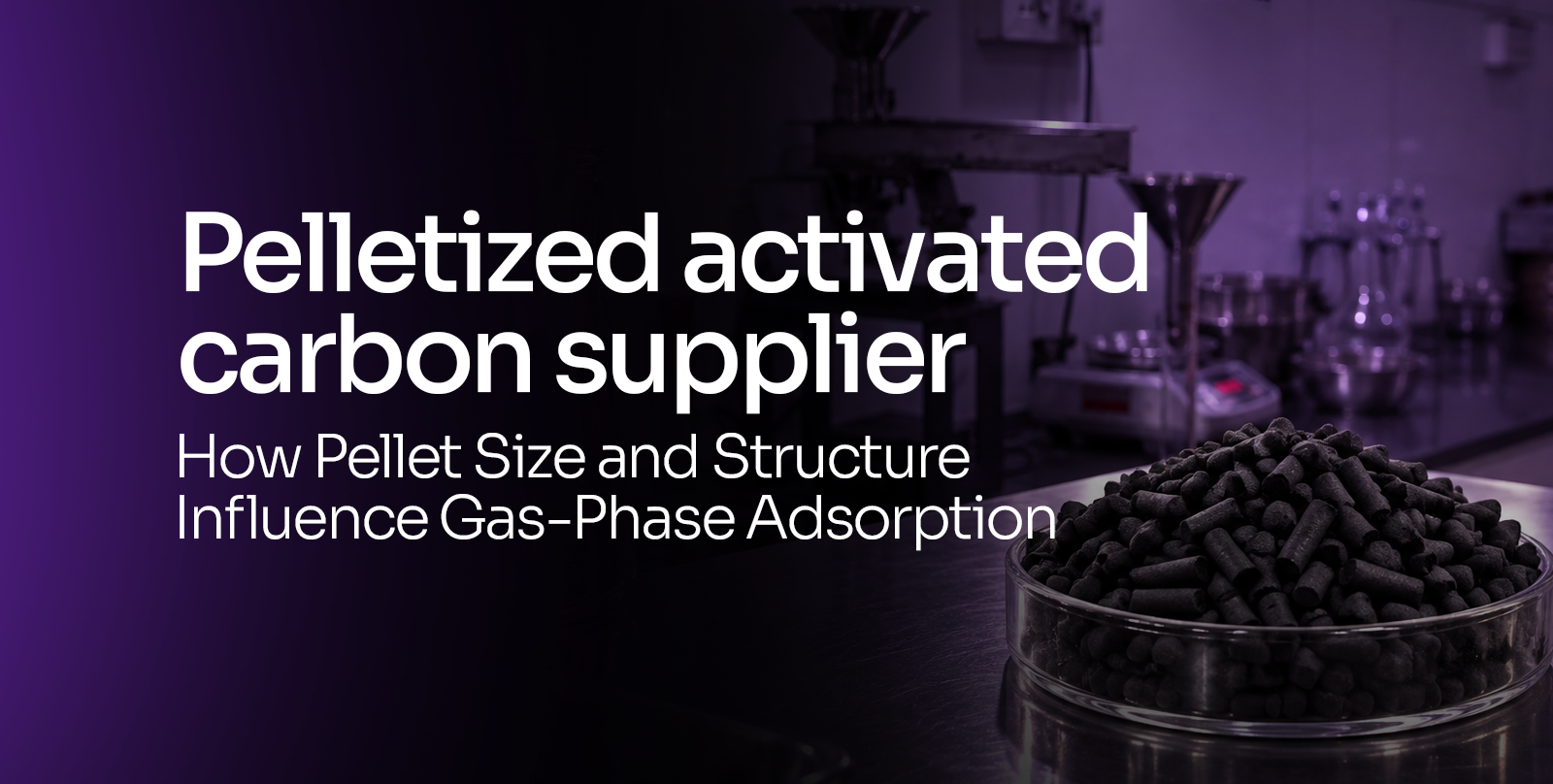
Among the different forms of activated carbon available, pelletized activated carbon has become a preferred choice for air and gas purification due to its high mechanical strength, low pressure drop, and excellent adsorption efficiency. Its cylindrical shape allows for better airflow, making it ideal for applications where continuous operation and long service life are essential. However, the performance of pelletized activated carbon depends on more than just the product itself. Factors such as raw material quality, activation process, pore structure, and manufacturing standards determine how effectively it performs in industrial environments. This is why businesses are increasingly looking beyond price and evaluating Pelletized Activated Carbon Suppliers based on their manufacturing expertise, technical capabilities, and commitment to quality. A trusted supplier does more than deliver activated carbon. They understand the unique requirements of different industries, recommend the right product for specific applications, and ensure consistent quality that supports long-term operational efficiency. In this blog, we’ll explore the key benefits and applications of pelletized activated carbon, the qualities to look for in reliable Pelletized Activated Carbon Suppliers, and how companies like CG Carbon help industries achieve efficient and sustainable purification solutions.

What Is Pelletized Activated Carbon?

Pelletized Activated Carbon (PAC) is a cylindrical form of activated carbon manufactured by compressing finely powdered carbon with suitable binders before subjecting it to a controlled activation process. This manufacturing method creates durable pellets with a highly porous internal structure capable of adsorbing a wide range of contaminants from air and gas streams. Unlike granular or powdered activated carbon, pelletized activated carbon is specifically engineered for applications that require high mechanical strength, low dust generation, and efficient airflow. Its uniform pellet shape allows gases to pass through filtration systems with minimal pressure loss while maximizing contact between contaminants and the carbon surface. Pelletized activated carbon is commonly produced from premium raw materials such as coconut shells or coal, depending on the intended application. Coconut shell-based pelletized activated carbon is particularly valued for its superior hardness, high adsorption capacity, and long operational life. These characteristics make pelletized activated carbon an effective solution for industrial purification systems where reliability and performance are critical.

Why Industries Prefer Pelletized Activated Carbon

Industrial filtration systems operate continuously under demanding conditions. The filtration media must maintain consistent performance while withstanding high airflow, varying temperatures, and prolonged operating cycles. Pelletized activated carbon offers several advantages that make it a preferred choice across multiple industries.

High Mechanical Strength

One of the biggest advantages of pelletized activated carbon is its excellent durability. The compact pellet structure resists breakage during handling and operation, reducing carbon loss and extending the lifespan of filtration systems. This mechanical strength also minimizes dust generation, helping maintain cleaner equipment and reducing maintenance requirements.

Excellent Airflow Characteristics

The cylindrical pellet design creates uniform spacing within the carbon bed, allowing gases to flow more freely compared to irregularly shaped filtration media. Lower pressure drop means fans and blowers require less energy to maintain airflow, improving the overall efficiency of air treatment systems.

Superior Adsorption Performance

The activation process develops an extensive network of microscopic pores throughout each pellet, creating a large surface area for adsorption. These pores effectively capture contaminants such as volatile organic compounds (VOCs), sulfur compounds, odors, solvents, and various industrial gases, making pelletized activated carbon highly efficient for air purification applications.

Longer Operational Life

Because of its durability and resistance to abrasion, pelletized activated carbon maintains its structural integrity over extended operating periods. This results in fewer replacements, lower maintenance costs, and improved system reliability.

Common Industrial Applications of Pelletized Activated Carbon

The combination of high adsorption efficiency and mechanical strength makes pelletized activated carbon suitable for a wide range of industrial applications.

Air Purification Systems

Air treatment is one of the largest applications for pelletized activated carbon. Industrial facilities use it to remove volatile organic compounds, unpleasant odors, solvent vapors, and hazardous gases from exhaust streams before releasing treated air into the environment. Industries including chemical manufacturing, pharmaceuticals, electronics, and food processing rely on pelletized activated carbon to maintain air quality while meeting environmental regulations.

Industrial Gas Purification

Many industrial processes require gases to be purified before use or discharge. Pelletized activated carbon effectively removes contaminants from process gases, helping improve product quality while protecting sensitive equipment from damage caused by impurities.

Solvent Recovery Systems

Many manufacturing facilities use valuable organic solvents during production. Pelletized activated carbon adsorbs solvent vapors from exhaust air, allowing these solvents to be recovered and reused. This not only reduces operational costs but also minimizes environmental emissions.

Odor Control Applications

Municipal wastewater treatment plants, food processing units, chemical factories, and waste management facilities often generate unpleasant odors. Pelletized activated carbon effectively adsorbs odor-causing compounds, helping create safer and more comfortable working environments while improving environmental compliance.

Catalyst Support and Chemical Processing

The highly porous structure of pelletized activated carbon also makes it suitable for catalyst support applications. Its large internal surface area provides an ideal platform for catalytic reactions while maintaining excellent gas flow characteristics in industrial reactors.

Why Product Quality Matters

Not all pelletized activated carbon products perform equally. The efficiency of adsorption depends on several factors, including:
  • Raw material selection
  • Activation technology
  • Surface area
  • Pore size distribution
  • Pellet hardness
  • Moisture content
  • Quality control during manufacturing
Even small variations in these parameters can affect adsorption capacity, operational life, pressure drop, and overall purification performance. For this reason, industries increasingly evaluate Pelletized Activated Carbon Suppliers based not only on product specifications but also on manufacturing consistency, technical expertise, and quality assurance systems. Partnering with an experienced supplier helps businesses achieve reliable filtration performance while reducing maintenance costs and improving operational efficiency.

The Importance of Choosing a Reliable Pelletized Activated Carbon Supplier 

Selecting the right activated carbon is only half the decision. The long-term performance of your filtration system also depends on the expertise and reliability of your supplier. With numerous Pelletized Activated Carbon Suppliers in the market, businesses should evaluate suppliers based on quality, technical capabilities, and long-term support rather than price alone. Here are the key factors to consider before choosing a supplier.

1. Manufacturing Expertise

A supplier with in-house manufacturing capabilities has greater control over product quality and consistency. Every stage, from raw material selection and activation to grading and packaging – directly influences the performance of pelletized activated carbon. Experienced manufacturers also understand how different activation processes affect pore structure, adsorption capacity, and product durability, allowing them to recommend the most suitable solution for each application.
  1. Quality of Raw Materials

The quality of activated carbon begins with the quality of its raw materials. Coconut shell-based activated carbon is widely preferred for industrial air and gas purification because of its superior hardness, excellent microporous structure, and high adsorption efficiency. When evaluating Pelletized Activated Carbon Suppliers, ask about the raw materials they use and how they ensure consistency across production batches.

3. Product Testing and Quality Assurance

Industrial purification systems demand consistent performance. Even slight variations in pellet size, hardness, moisture content, or adsorption capacity can affect operational efficiency. Reliable suppliers implement strict quality control procedures throughout the manufacturing process and conduct laboratory testing to ensure every batch meets predefined performance standards. A supplier committed to quality assurance provides confidence that every shipment will deliver reliable and repeatable filtration performance.

4. Technical Expertise

Different industries require different adsorption characteristics. For example, an activated carbon solution designed for solvent recovery may not be suitable for odor control or gas purification. The best Pelletized Activated Carbon Suppliers work closely with customers to understand operating conditions, contaminant profiles, airflow requirements, and performance expectations before recommending the appropriate product. This technical approach helps businesses maximize filtration efficiency while reducing operating costs.

5. Customisation Capabilities

Every industrial process has unique purification requirements. A capable supplier should be able to customise pelletized activated carbon based on:
  • Target contaminants
  • Pellet dimensions
  • Adsorption characteristics
  • Industry-specific performance requirements
  • Operating conditions
Custom-engineered solutions often outperform standard products because they are designed specifically for the intended application.

Why Industries Choose CG Carbon as Their Pelletized Activated Carbon Supplier

Choosing the right supplier means partnering with a company that understands both the science of activated carbon and the challenges faced by modern industries. This is where CG Carbon has established itself as a trusted name in the global activated carbon industry. With years of expertise in manufacturing premium coconut shell activated carbon, CG Carbon delivers high-performance solutions that support industrial purification across a wide range of applications.

Premium Coconut Shell Activated Carbon

At CG Carbon, quality starts with carefully selected coconut shells, a renewable raw material known for producing activated carbon with exceptional hardness, excellent microporosity, and superior adsorption capacity. These properties make CG Carbon’s pelletized activated carbon particularly effective for industrial air treatment, gas purification, solvent recovery, and odor control applications where durability and consistent performance are essential.

Advanced Manufacturing Facilities

Manufacturing precision is critical to the performance of pelletized activated carbon. CG Carbon combines advanced production technologies with carefully controlled activation processes to create activated carbon products that deliver reliable adsorption performance and long service life. Every production stage is monitored to ensure consistency, enabling customers to achieve predictable filtration performance across every batch.

Research-Driven Product Development

Industrial purification challenges continue to evolve with changing environmental regulations and process requirements. CG Carbon invests in research and development to continuously improve product performance and develop activated carbon solutions that address emerging industrial needs. This focus on innovation enables the company to provide technically advanced products capable of meeting demanding purification applications.

Customized Solutions for Diverse Industries

Rather than offering a one-size-fits-all approach, CG Carbon works closely with customers to understand their purification objectives and recommend solutions that align with their operational requirements. Its pelletized activated carbon solutions support industries including:
  • Air purification
  • Industrial gas treatment
  • Chemical processing
  • Food and beverage manufacturing
  • Pharmaceutical production
  • Environmental applications
  • Solvent recovery systems
This application-focused approach helps customers achieve higher adsorption efficiency and improved operational reliability.

Sustainability at the Core

Sustainability is becoming a key consideration for industries worldwide. By manufacturing activated carbon from renewable coconut shell resources, CG Carbon supports environmentally responsible purification without compromising product performance. The company’s focus on sustainable manufacturing reflects its commitment to helping industries meet both operational and environmental objectives.

Conclusion

Pelletized activated carbon has become an essential component in modern industrial air and gas purification systems because of its excellent adsorption capacity, mechanical strength, and operational reliability. However, achieving maximum filtration efficiency depends not only on selecting the right product but also on choosing the right Pelletized Activated Carbon Suppliers. A reliable supplier brings far more than a quality product – they provide technical expertise, consistent manufacturing standards, customised solutions, and long-term support that help industries improve purification performance while reducing operational costs. As a trusted manufacturer of premium coconut shell activated carbon, CG Carbon combines advanced manufacturing, research-driven innovation, stringent quality control, and sustainable production practices to deliver pelletized activated carbon solutions that meet the evolving needs of industries worldwide. Whether your application involves industrial air purification, gas treatment, solvent recovery, or odor control, partnering with an experienced supplier like CG Carbon ensures reliable performance, consistent quality, and long-term value.

Frequently Asked Questions

1. What are Pelletized Activated Carbon Suppliers?

Pelletized Activated Carbon Suppliers manufacture and supply cylindrical activated carbon products used primarily for air purification, gas treatment, solvent recovery, odor control, and various industrial filtration applications.

2. Why is pelletized activated carbon preferred for air purification?

Its cylindrical shape offers excellent airflow, lower pressure drop, high mechanical strength, minimal dust formation, and superior adsorption performance, making it ideal for continuous air and gas treatment systems.

3. What industries use pelletized activated carbon?

Pelletized activated carbon is widely used in chemical processing, pharmaceuticals, food and beverage manufacturing, solvent recovery, wastewater treatment, air purification, odor control, and environmental protection applications.

4. How do I choose the best Pelletized Activated Carbon Suppliers?

Look for suppliers with proven manufacturing expertise, premium raw materials, strict quality control, technical support, customisation capabilities, and a strong commitment to sustainable manufacturing practices.

5. Why choose CG Carbon as your Pelletized Activated Carbon Supplier?

CG Carbon combines premium coconut shell raw materials, advanced manufacturing technology, application-specific solutions, rigorous quality assurance, and sustainable production practices to deliver reliable pelletized activated carbon for demanding industrial applications.  

Versatility of Coconut Shell Activated Carbon in Modern Uses

Why Coconut Shells?

Coconut shells are an abundant, renewable, and environmentally friendly resource that provides a high-quality base for activated carbon production. Compared to other sources like coal or wood, coconut shell activated carbon offers:
  • Higher Hardness and Durability: Ensures a longer lifespan in filtration systems.
  • Greater Surface Area and Microporosity: Enhances adsorption efficiency, making it ideal for purification processes.
  • Eco-friendliness: A sustainable byproduct of the coconut industry, reducing waste and environmental impact.

Applications of Coconut Shell Activated Carbon

1. Water Treatment

Water purification is one of the primary uses of activated carbon. Coconut shell activated carbon effectively removes:
  • Chlorine and Chloramine: Improving taste and odor in drinking water.
  • Heavy Metals: Adsorbing lead, mercury, and other toxic metals.
  • Organic Contaminants: Eliminating pesticides, herbicides, and industrial pollutants.
Municipal water treatment plants, household water filters, and wastewater treatment facilities widely use activated carbon to ensure safe and clean water.

2. Air Purification

Coconut shell activated carbon is an essential component in air filtration systems. Its microporous structure effectively captures and neutralizes:
  • Volatile Organic Compounds (VOCs): Reducing indoor air pollution from household and industrial sources.
  • Odors and Harmful Gases: Used in masks, air purifiers, and ventilation systems to eliminate pollutants.
  • Toxic Fumes: Applied in industrial settings to control emissions and maintain air quality.

3. Gold Recovery

The mining industry utilizes activated carbon for gold recovery in the Carbon-in-Pulp (CIP) and Carbon-in-Leach (CIL) processes. The high adsorption capacity of coconut shell activated carbon allows efficient extraction of gold from ore, making it a valuable tool in mining operations.

4. Medical and Pharmaceutical Uses

Activated carbon is used in medical applications due to its ability to adsorb toxins and poisons. Some of its key uses include:
  • Poison Treatment: Administered in emergency situations for drug overdoses and toxin ingestion.
  • Hemodialysis: Used in artificial kidneys to purify blood by removing waste products.
  • Pharmaceutical Filtration: Ensures purity in drug manufacturing by removing unwanted contaminants.

5. Food and Beverage Industry

The food industry leverages activated carbon to enhance product quality by:
  • Decolorization: Removing unwanted pigments from sugar, syrups, and edible oils.
  • Purification: Eliminating impurities in beverages like wine and fruit juices.
  • Odor and Taste Improvement: Enhancing the sensory quality of food and drinks.

Conclusion

Coconut shell activated carbon is a highly versatile and environmentally friendly solution for various industries. From water purification and air filtration to medical applications and gold recovery, its unique properties make it a preferred choice worldwide. As sustainability becomes a key focus across industries, the demand for coconut shell activated carbon continues to grow, reinforcing its importance in modern applications. CG Carbon remains committed to providing high-quality activated carbon solutions that cater to the diverse needs of businesses while promoting eco-friendly practices. To learn more about our products and how they can benefit your industry, visit our website or contact us today.